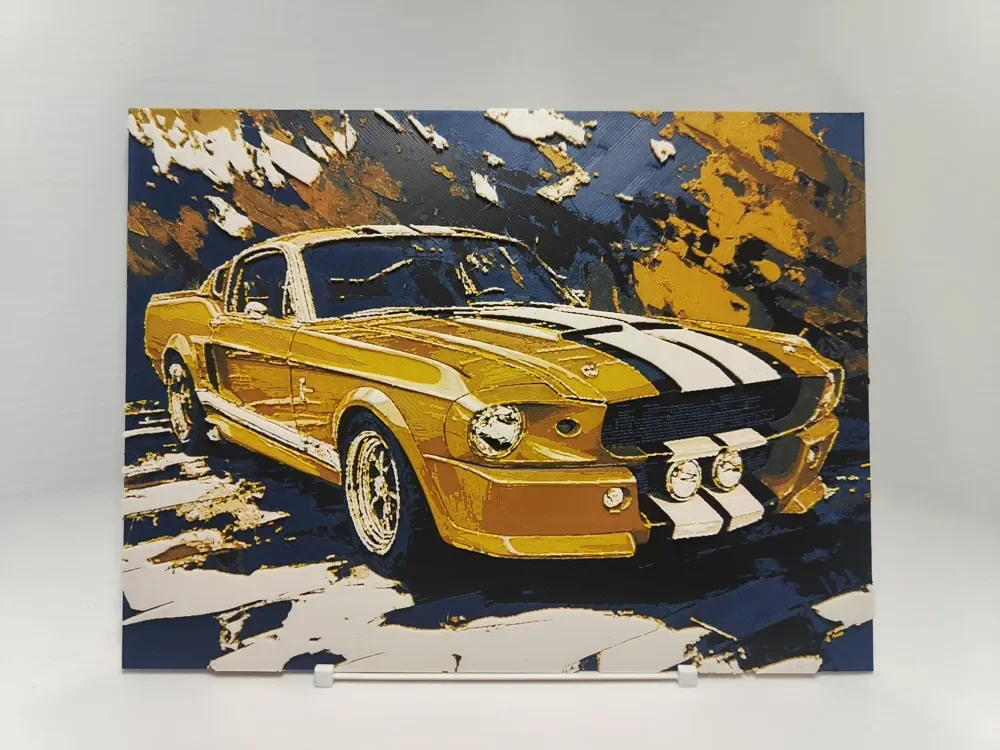
Ford Mustang - Hueforge
by BeaN
A golden Ford Mustang roars to life through bold artistic strokes, its iconic racing stripes gleaming white against the burnished yellow body. BeaN's dynamic composition captures the legendary muscle car amid an explosion of color—deep blues and rich golds creating dramatic contrast through expressive, painterly brushwork. The weathered, distressed aesthetic transforms this automotive icon into a striking piece of pop art that celebrates American muscle car heritage.
View on MakerWorldRequired Filaments5
Bambu Lab Basic Black
Bambu Lab Matte Dark Blue
Bambu Lab Basic Orange
Bambu Lab Basic Sunflower Yellow
Bambu Lab Basic Jade White
Why filament details may vary
Filament details (brand, color, and TD value) may not exactly match the designer's original specification. In some cases, the designer didn't specify exact filaments and we've matched the closest options we could find. Always check the original listing for full details.
Some filament links are affiliate links — we may earn a small commission at no extra cost to you. Learn more
Sign up to track your filament inventory and check your matches.
Create accountYou Might Also Like
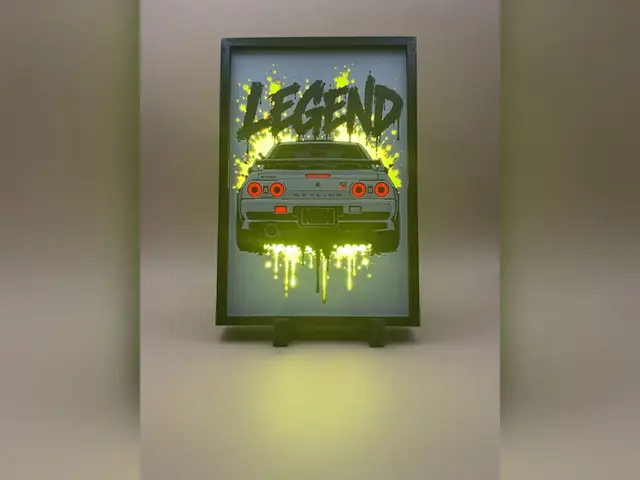
Nissan Skyline GT-R R32 - Hueforge Backlit Print
by Thadius
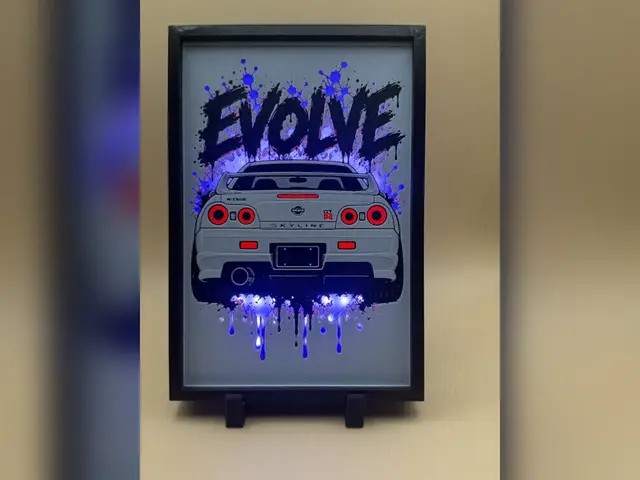
Nissan Skyline GT-R R33 EVOLVE HueForge Print
by Thadius
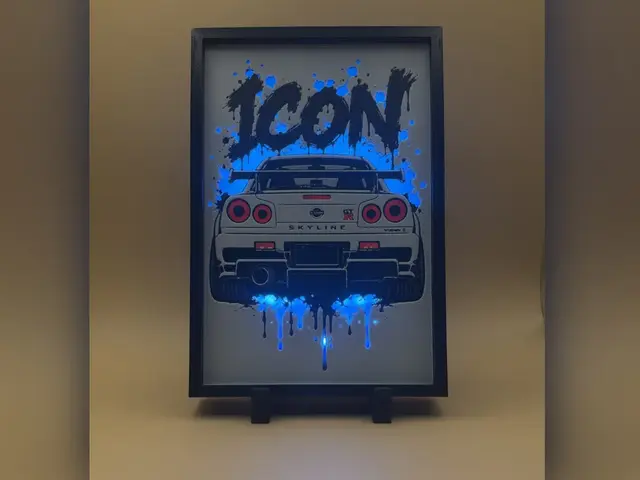
Nissan Skyline GT-R R34 ICON HueForge Print
by Thadius
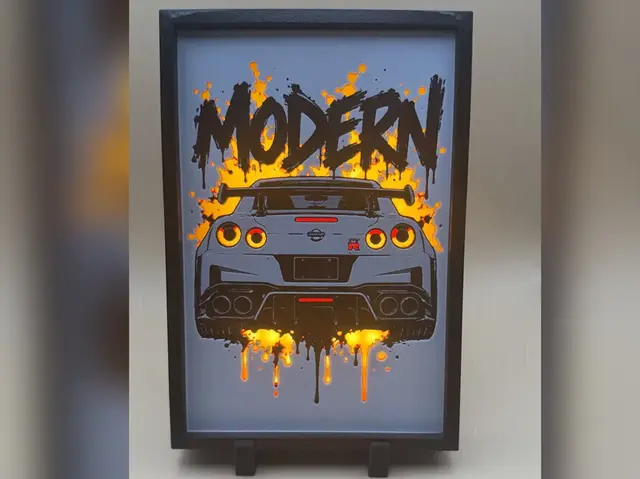
Nissan Skyline GT-R R35 HueForge Print
by Thadius
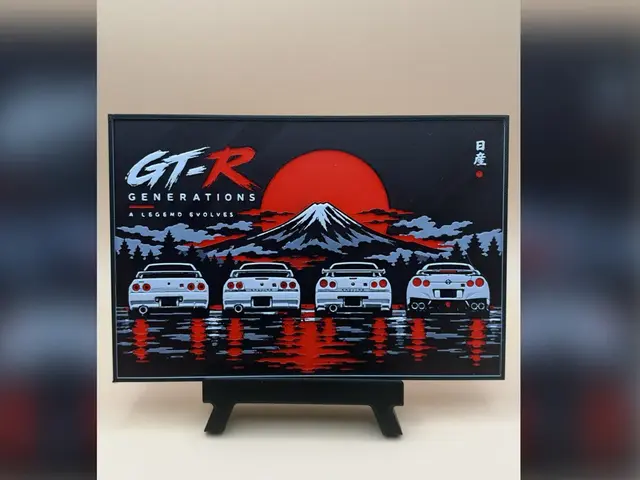
Nissan Skyline GT-R Generations HueForge Print
by Thadius
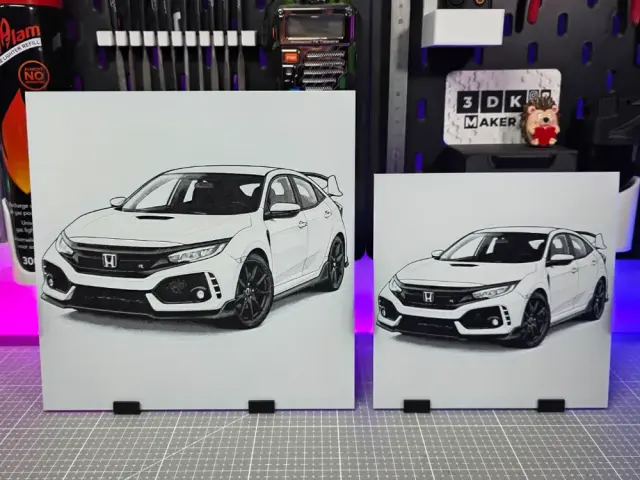
Honda Civic Type R FK8 - Hueforge - 3 Colors
by Montoya Maker
Recent Articles
View all
Best 3D Printed Gifts for Everyone on Your List — Made with HueForge
The best 3D printed gifts for everyone on your list, made with HueForge — custom pet and portrait art, ornaments and gift tags, bookmarks, and fandom prints matched to the recipient, plus how to turn gift requests into income.
Best Christmas 3D Prints for HueForge: Ornaments, Santa & Holiday Movie Posters
The Christmas 3D prints worth making as HueForge filament paintings — tree ornaments, Santa and snowmen, holiday movie posters, festive fandom crossovers, and gift tags, grouped by theme.
Best Anime 3D Prints for HueForge: From Shōnen Classics to the Modern Wave
The best anime 3D prints to make as HueForge filament paintings — One Piece, Naruto, Dragon Ball, Demon Slayer, Jujutsu Kaisen, Frieren, Gundam, and anime bookmarks, each linked in the HuePick catalog.