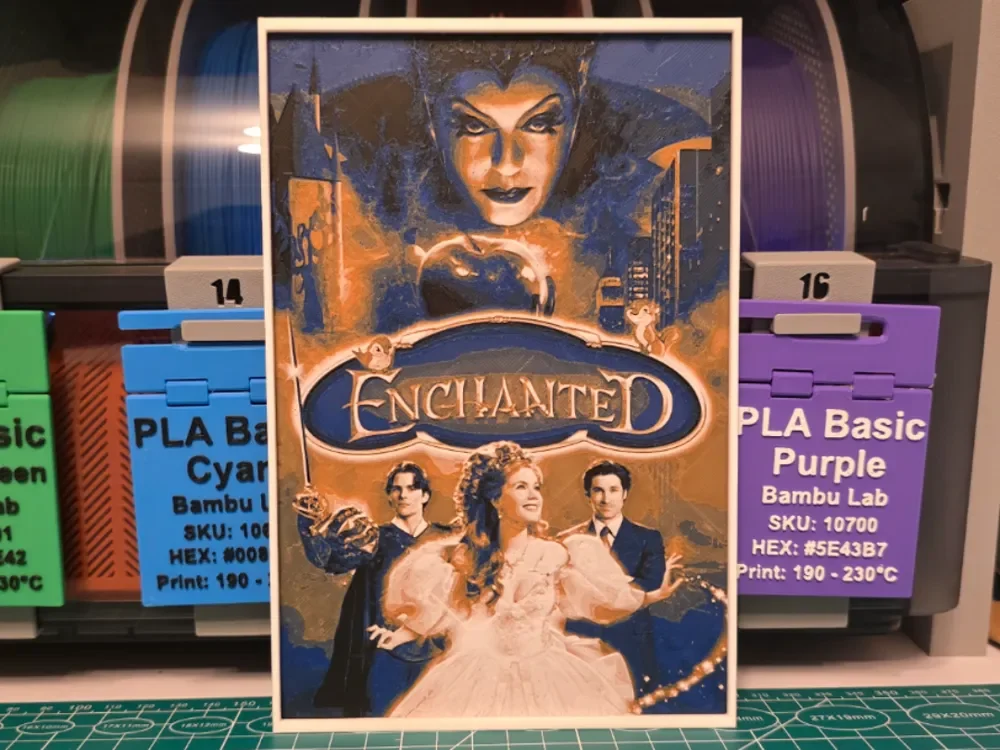
Enchanted Movie Poster - Hueforge Art
by Lumpy3D
Disney's beloved fairy tale mashup comes to life in this enchanting multi-layered composition. The Evil Queen's menacing visage dominates the upper portion in deep blues and mystical purples, while below, Princess Giselle radiates joy in her flowing ball gown alongside her romantic leads. Warm oranges and golden hues create magical depth, contrasting beautifully with the cooler supernatural tones above in this whimsical tribute.
View on MakerWorldRequired Filaments4
Bambu Lab Basic Black
Bambu Lab Basic Blue
Bambu Lab Basic Orange
Bambu Lab Basic Jade White
Why filament details may vary
Filament details (brand, color, and TD value) may not exactly match the designer's original specification. In some cases, the designer didn't specify exact filaments and we've matched the closest options we could find. Always check the original listing for full details.
Some filament links are affiliate links — we may earn a small commission at no extra cost to you. Learn more
Sign up to track your filament inventory and check your matches.
Create accountYou Might Also Like
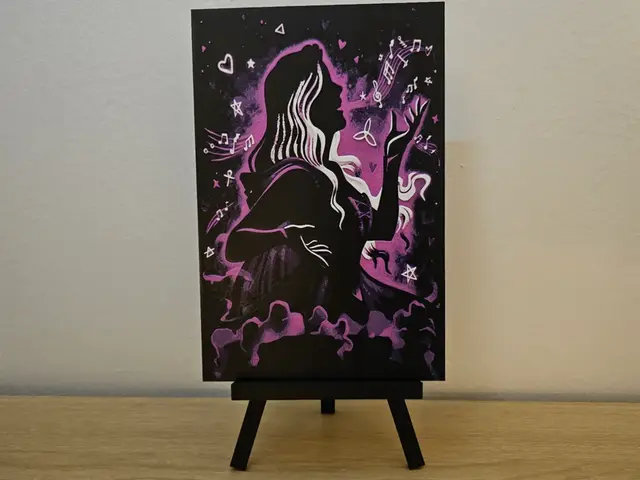
Hocus Pocus Halloween Hueforge
by Opao
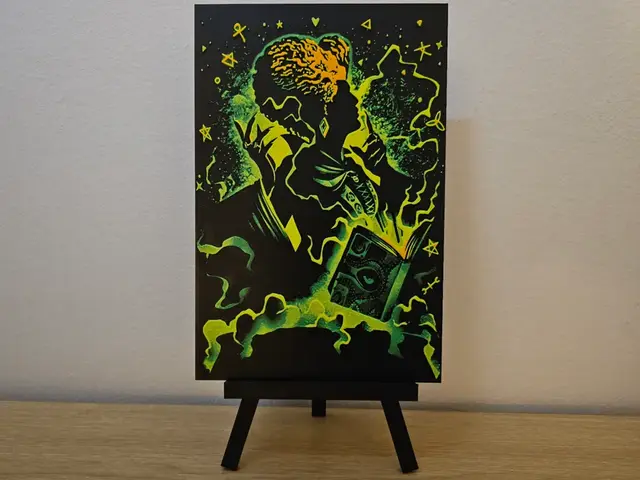
Hocus Pocus Halloween Hueforge
by Opao
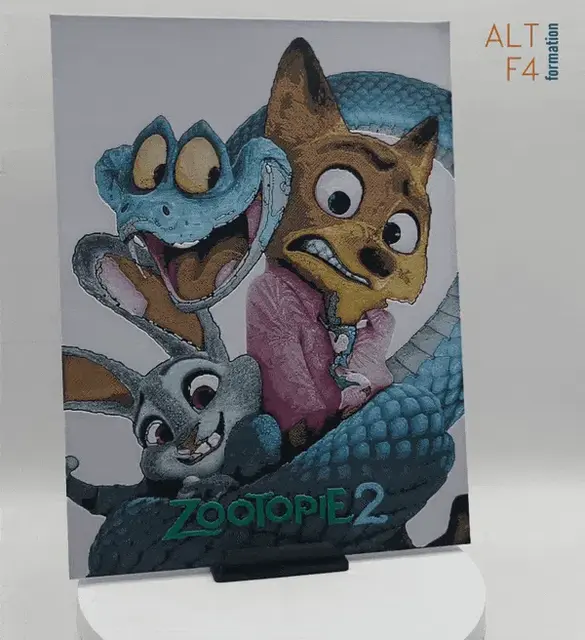
Zootopia 2 - hueforge
by Altf4-Formation
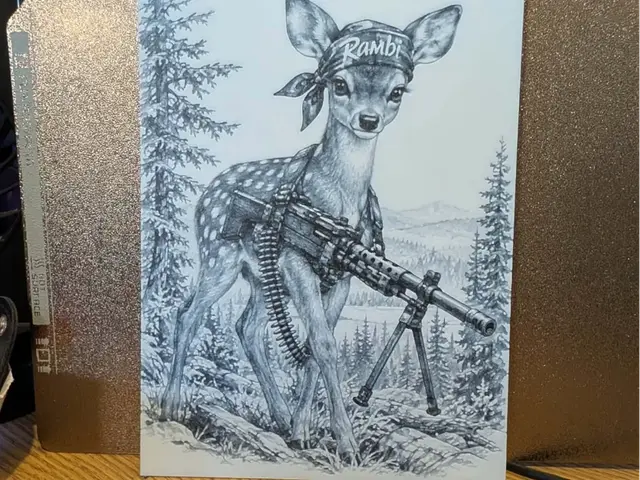
Bambi revenge - hueforge
by 3dGlow
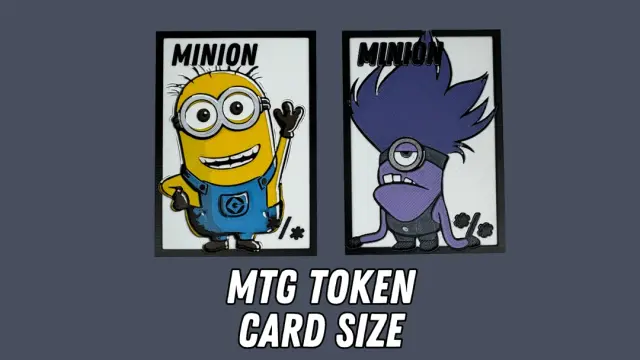
Minion - Magic the Gathering Tokens
by Canadian Gamer
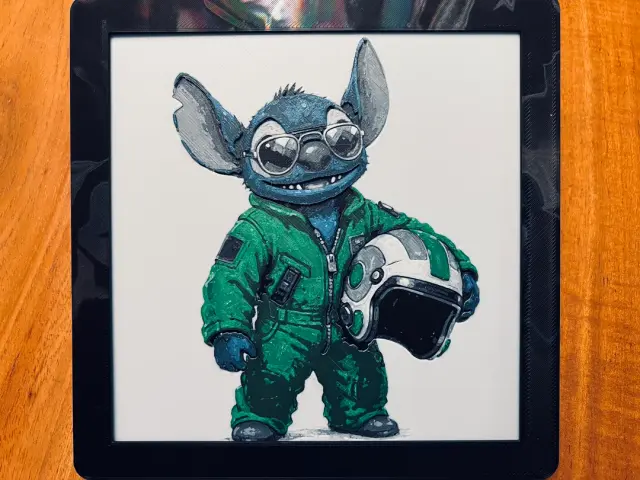
Stitch dressed as Fighter Pilot
by JustBe 3D Printing
Recent Articles
View all
Best 3D Printed Gifts for Everyone on Your List — Made with HueForge
The best 3D printed gifts for everyone on your list, made with HueForge — custom pet and portrait art, ornaments and gift tags, bookmarks, and fandom prints matched to the recipient, plus how to turn gift requests into income.
Best Christmas 3D Prints for HueForge: Ornaments, Santa & Holiday Movie Posters
The Christmas 3D prints worth making as HueForge filament paintings — tree ornaments, Santa and snowmen, holiday movie posters, festive fandom crossovers, and gift tags, grouped by theme.
Best Anime 3D Prints for HueForge: From Shōnen Classics to the Modern Wave
The best anime 3D prints to make as HueForge filament paintings — One Piece, Naruto, Dragon Ball, Demon Slayer, Jujutsu Kaisen, Frieren, Gundam, and anime bookmarks, each linked in the HuePick catalog.