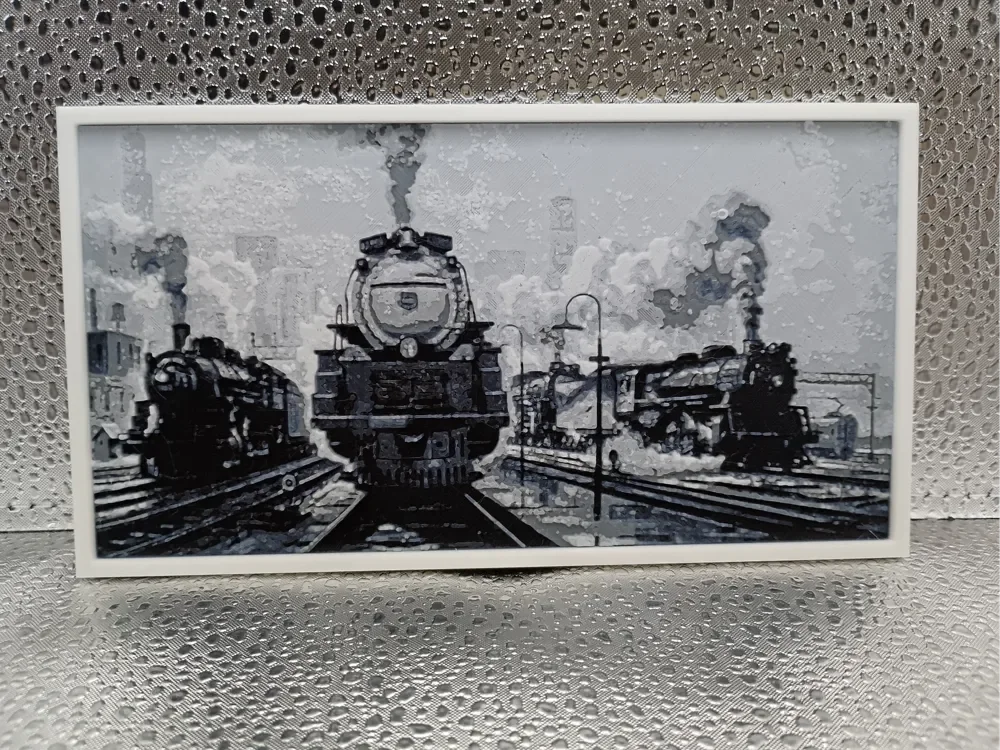
“Challenger” No. 3985 – Hueforge
Steam billows dramatically from the legendary Union Pacific Challenger No. 3985 as it dominates this powerful railway scene. Multiple locomotives crowd the busy rail yard, their imposing forms rendered in deep blacks and grays against a moody, cloud-filled sky. The composition captures the raw industrial might of America's steam era, with intricate details highlighting the massive engine's distinctive front profile and the atmospheric chaos of working trains surrounded by billowing smoke and steam.
View on MakerWorldRequired Filaments4
Why filament details may vary
Filament details (brand, color, and TD value) may not exactly match the designer's original specification. In some cases, the designer didn't specify exact filaments and we've matched the closest options we could find. Always check the original listing for full details.
Some filament links are affiliate links — we may earn a small commission at no extra cost to you. Learn more
Sign up to track your filament inventory and check your matches.
Create accountYou Might Also Like
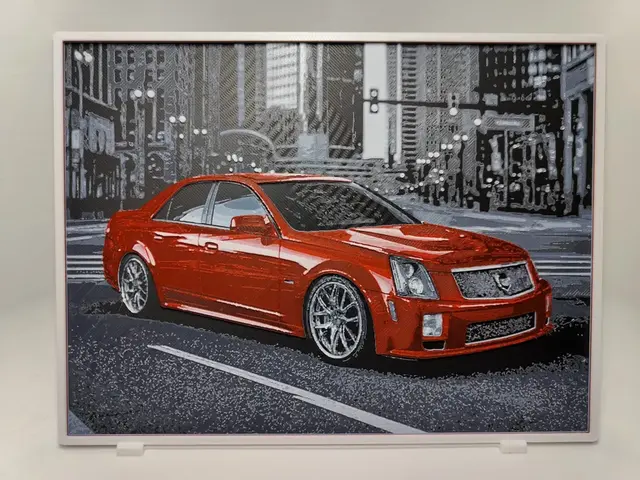
Cadillac CTS-V - Hueforge
by BeaN
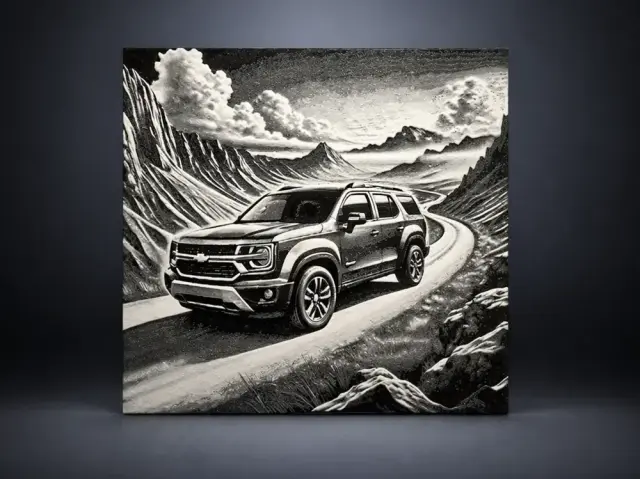
Chevrolet Niva in the mountains
by Aleksandr
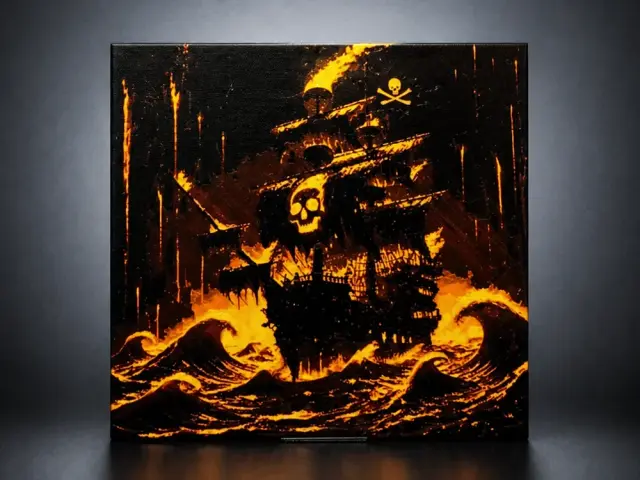
Infernal Galleon - Ship of Eternal Flame
by Aleksandr
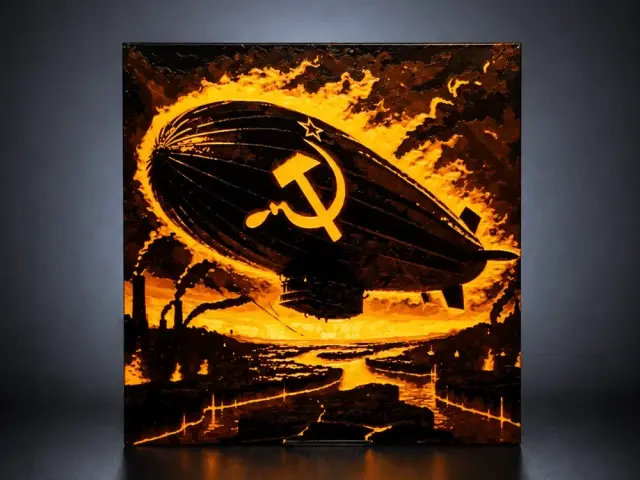
Kirov airship - The Skyborne Revolution
by Aleksandr
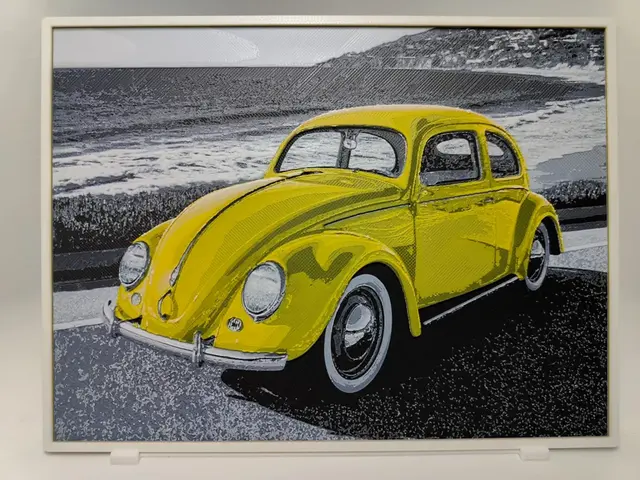
VW Beetle - Hueforge
by BeaN
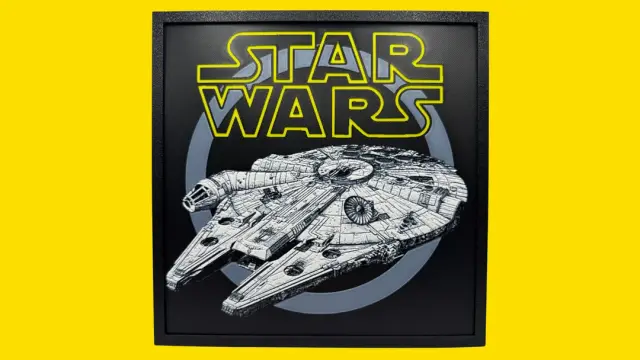
Millennium Falcon - Star Wars Hueforge
by Canadian Gamer
Recent Articles
View all
Best Christmas 3D Prints for HueForge: Ornaments, Santa & Holiday Movie Posters
The Christmas 3D prints worth making as HueForge filament paintings — tree ornaments, Santa and snowmen, holiday movie posters, festive fandom crossovers, and gift tags, grouped by theme.
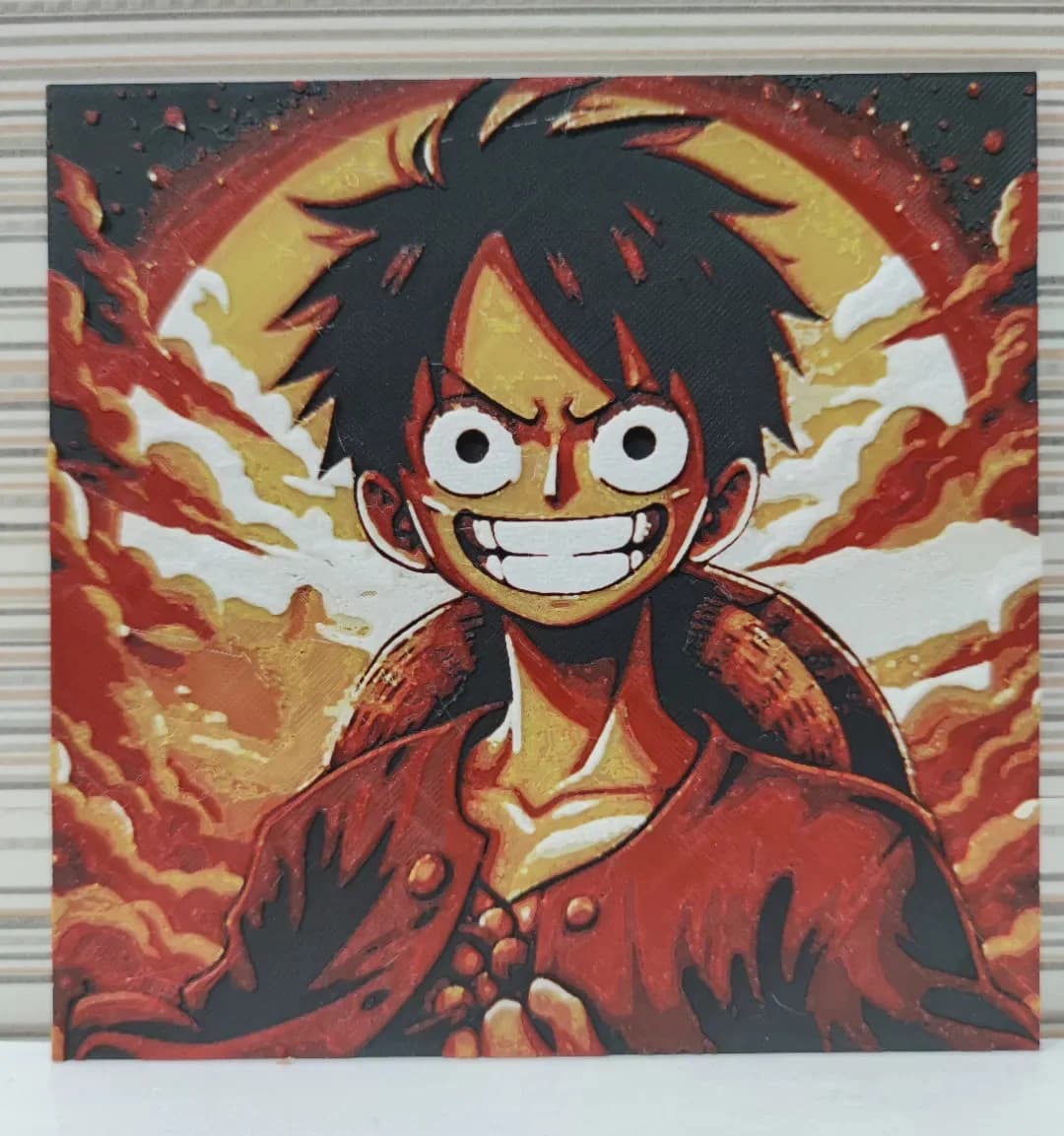
Best Anime 3D Prints for HueForge: From Shōnen Classics to the Modern Wave
The best anime 3D prints to make as HueForge filament paintings — One Piece, Naruto, Dragon Ball, Demon Slayer, Jujutsu Kaisen, Frieren, Gundam, and anime bookmarks, each linked in the HuePick catalog.
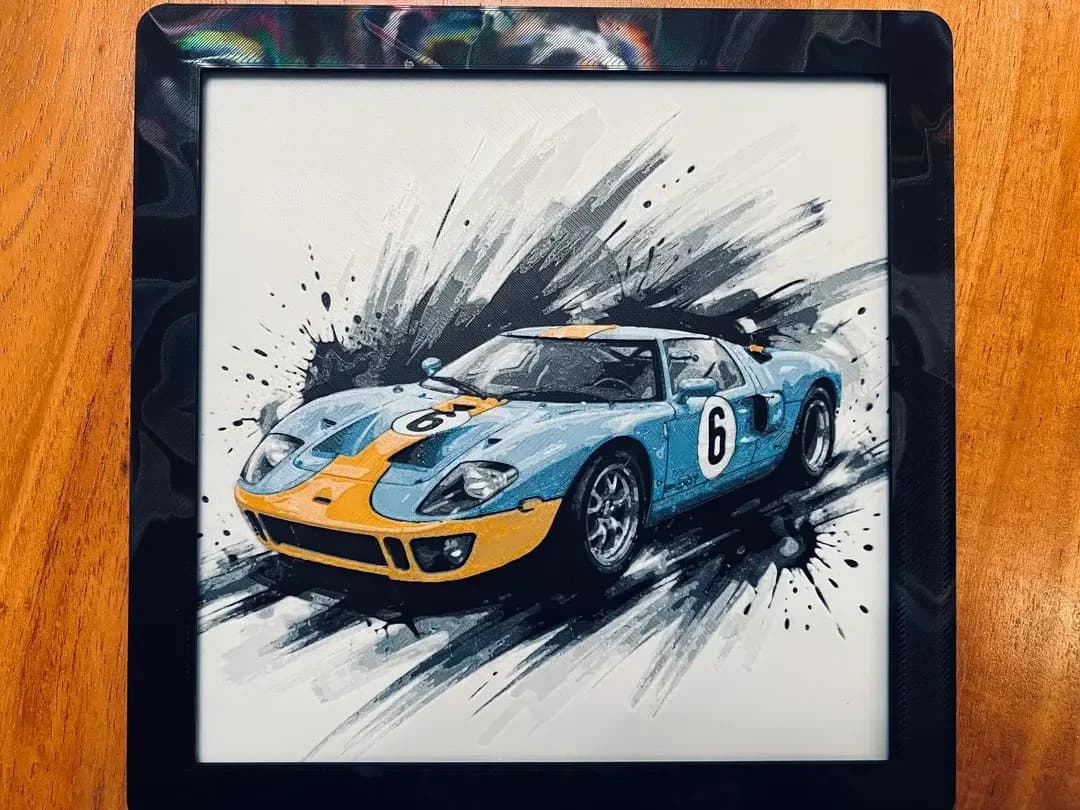
Best Car 3D Prints for HueForge: From Japanese Icons to Movie Cars
The best car 3D prints to make as HueForge filament paintings — JDM legends, supercars, American muscle, F1 and rally posters, and movie icons like the DeLorean, each linked in the HuePick catalog.