Best KPop Demon Hunters STL Files for HueForge: Huntrix, Saja Boys & More
The KPop Demon Hunters STL files worth printing as HueForge filament paintings — the Huntrix trio, the Saja Boys, Derpy Cat and Sussie, and the bookmarks.
Quick Answer
The strongest KPop Demon Hunters STL files for HueForge sit in four pockets of the catalog: the Huntrix trio (Rumi, Mira, and Zoey), the Saja Boys led by Jinu, the companion creatures Derpy Cat and Sussie, and a load of bookmarks that make good entry-point prints. The picks below favor models that play the franchise's defining visual tension — idol-clean palettes on one side, supernatural silhouettes on the other.
KPop Demon Hunters sits in an unusual corner of the HueForge catalog. Most franchise prints pull from one register — either character portraits or creature designs or prop-and-object work. This one has all three, and they come from opposite ends of the same story: an idol group that hunts demons, and the demons they're hunting. The visual contrast between the Huntrix's styled idol aesthetics and the Saja Boys' supernatural silhouettes is exactly the kind of tonal range HueForge is built to exploit.
Nothing here is for sale; this is a discovery list, not a shop. Each model card links to its source page on MakerWorld, Patreon, or wherever the designer published it. From there you download the file and print it yourself on your AMS or multi-material setup. The browse → click through → download → print workflow is the whole shape of using HuePick.
On the file format: most of these models ship as .3mf files with the HueForge layer plan baked in; a few are .hfp project files or bare STL geometry. We use "STL files" throughout as the maker-search shorthand the way most printers do — the actual format is listed on each model's source page.
If HueForge is the unfamiliar piece, the HueForge Printing for Beginners walkthrough covers what the software does and what changes about the slicer setup. Already comfortable? Keep reading.
Sections below are ordered with the Huntrix first — the idol portraits are where most makers start with this franchise — followed by the Saja Boys, the companion creatures, and the bookmarks.
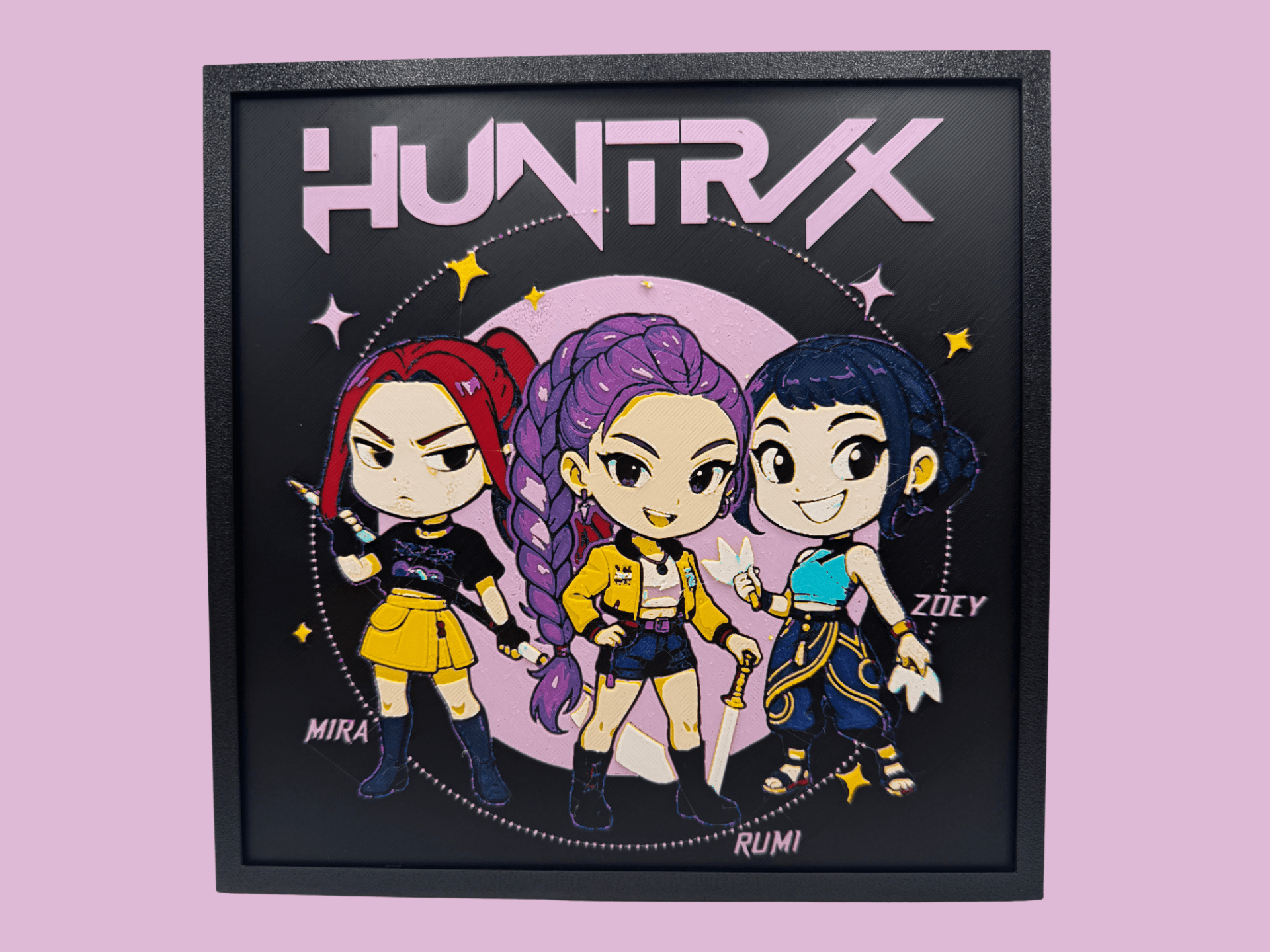
The Huntrix: Rumi, Mira & Zoey
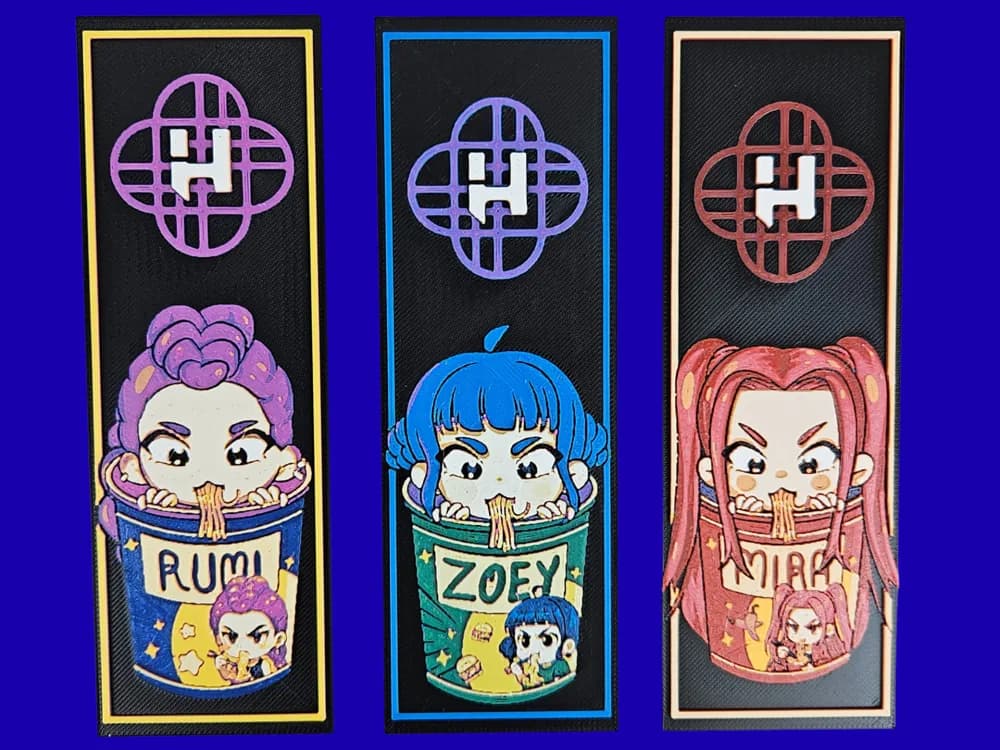
The Huntrix prints are idol-portrait work, and idol portraits have a specific challenge: the design language that makes a K-pop character visually distinctive — vivid styled hair, detailed costume layering, expressive face — is exactly what HueForge's tonal value logic will flatten if you don't build your palette around it deliberately. What makes these prints work is tonal separation between three layers: hair, skin, and outfit. Get those three reading as distinct values and the character snaps into focus. Let them blur together and you get a muddy gradient with a face in the middle.
Each of the three Huntrix members has a different dominant palette, which means each one is a different palette problem. That's the reason to print all three as a set rather than just one — they don't repeat each other. They also don't compete for wall space the way matching-character trios sometimes do, because the member whose palette is most distinct from the other two will carry the group composition from further away.
If you're working with a four- or five-color AMS and want to start with one member, pick the one whose hair color sits furthest from their skin tone in tonal value. That gap is where the print earns its legibility, and a constrained palette makes it more important, not less.
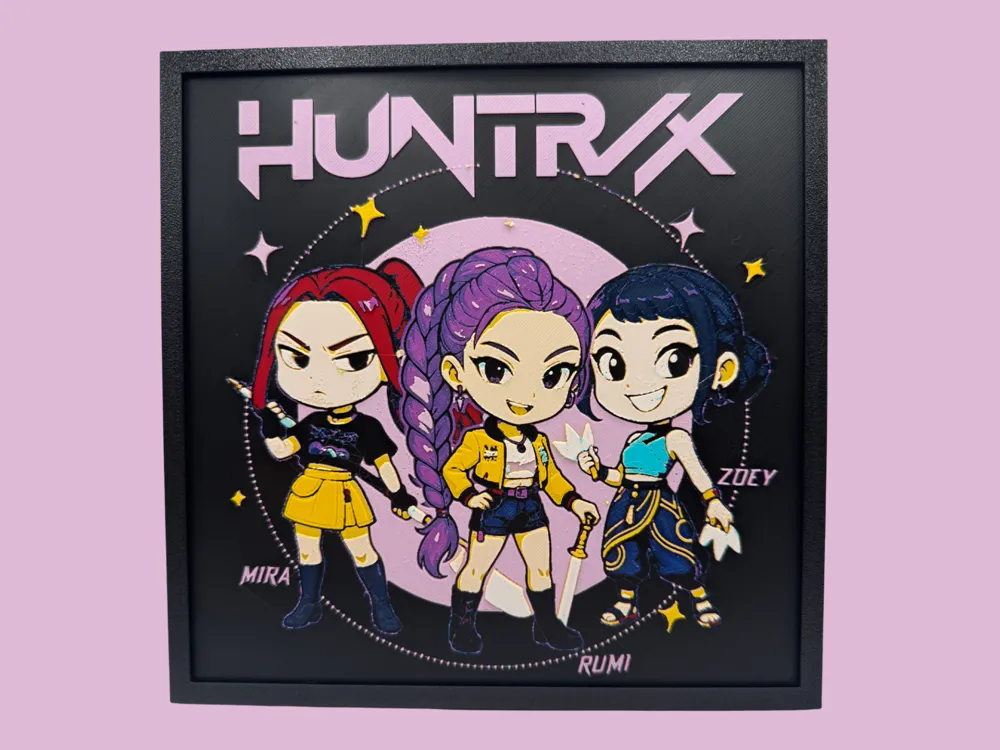
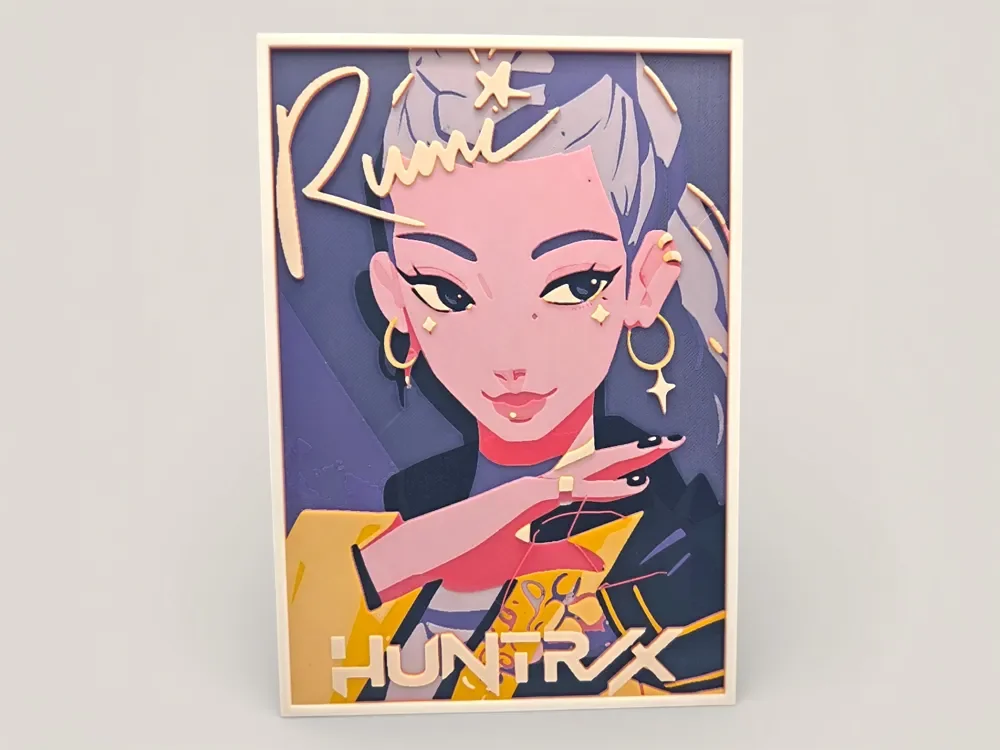

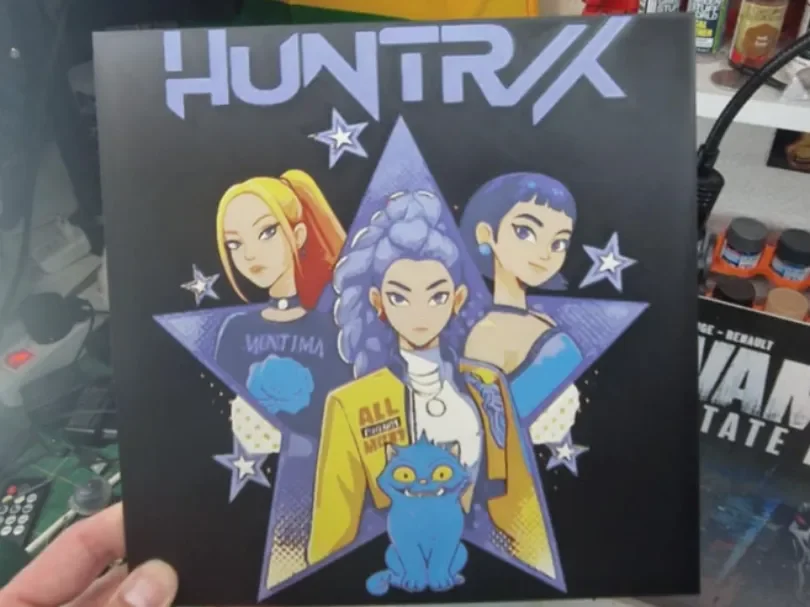
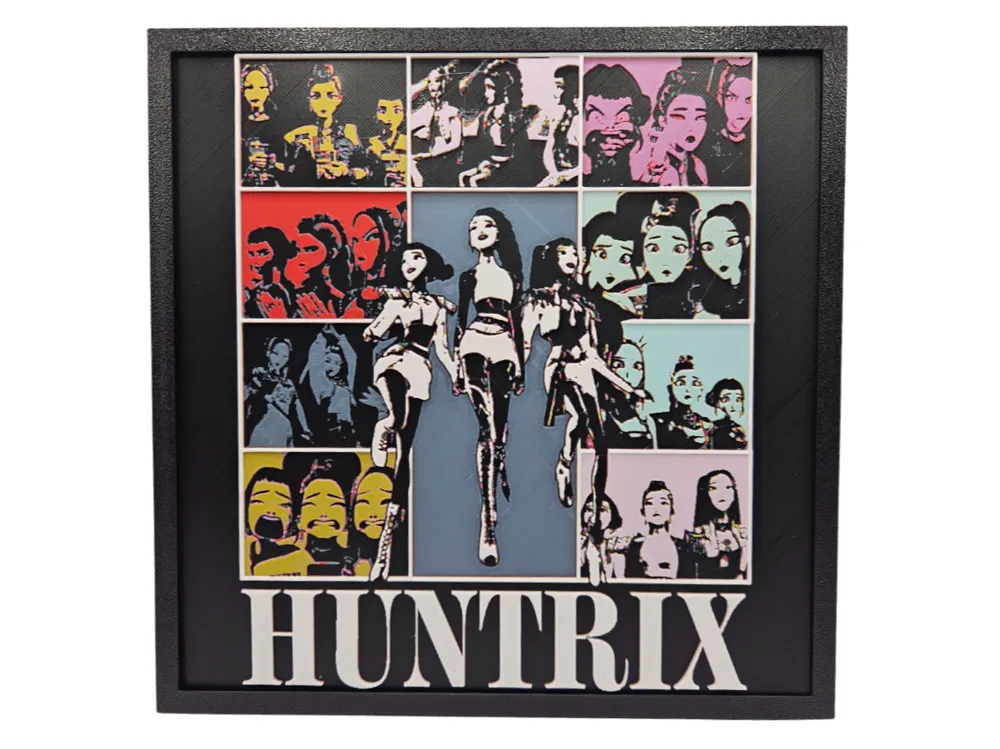

Browse all Huntrix models in the HuePick catalog →
The Saja Boys
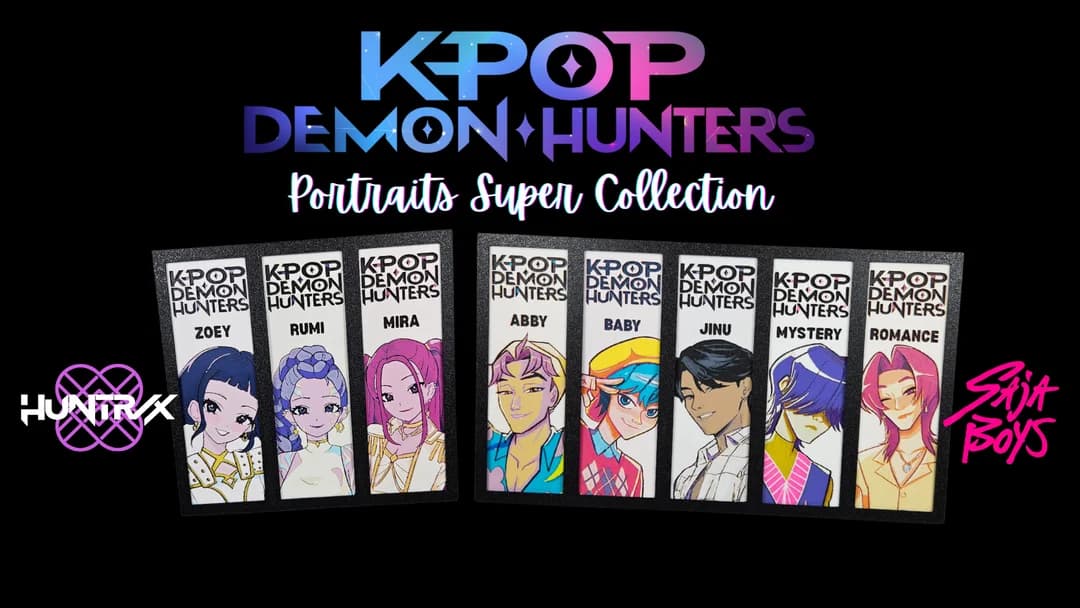
Where the Huntrix rewards careful tonal layering, the Saja Boys reward contrast. These are the demon-faction designs — higher silhouette drama, bolder shapes, and color choices that lean toward the dark end of the tonal range rather than the idol-soft palette on the other side of the franchise. Jinu, the Saja Boys' leader, is the named pick in this section and the one with the most catalog presence. His designs tend to hold stronger silhouette from a distance than the generic Saja Boys, which makes him the easier starting point if you're new to the faction.
The generic Saja Boys — Romance, Mystery, Abby, Baby — are a different kind of print. The more abstract and stylized the design, the more palette flexibility you have, because the read doesn't depend on the viewer recognizing a specific face. That's actually a useful constraint: a Jinu print that's slightly off in skin tone reads as wrong. A stylized Romance Saja print with an unexpected palette can still read as intentional.
The Saja Boys section is where a six-color setup starts earning its complexity. The dark-base-with-accent-detail structure that most of these designs share is exactly what benefits from the extra tonal steps.

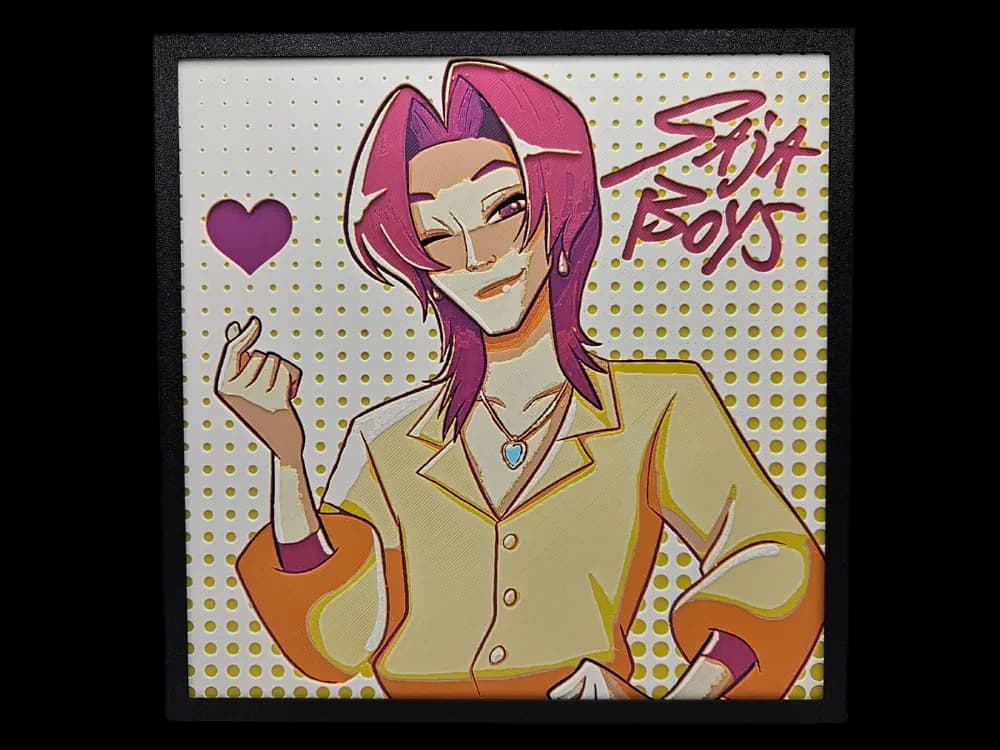


Browse all Saja Boys models in the HuePick catalog →
Derpy Cat & Sussie
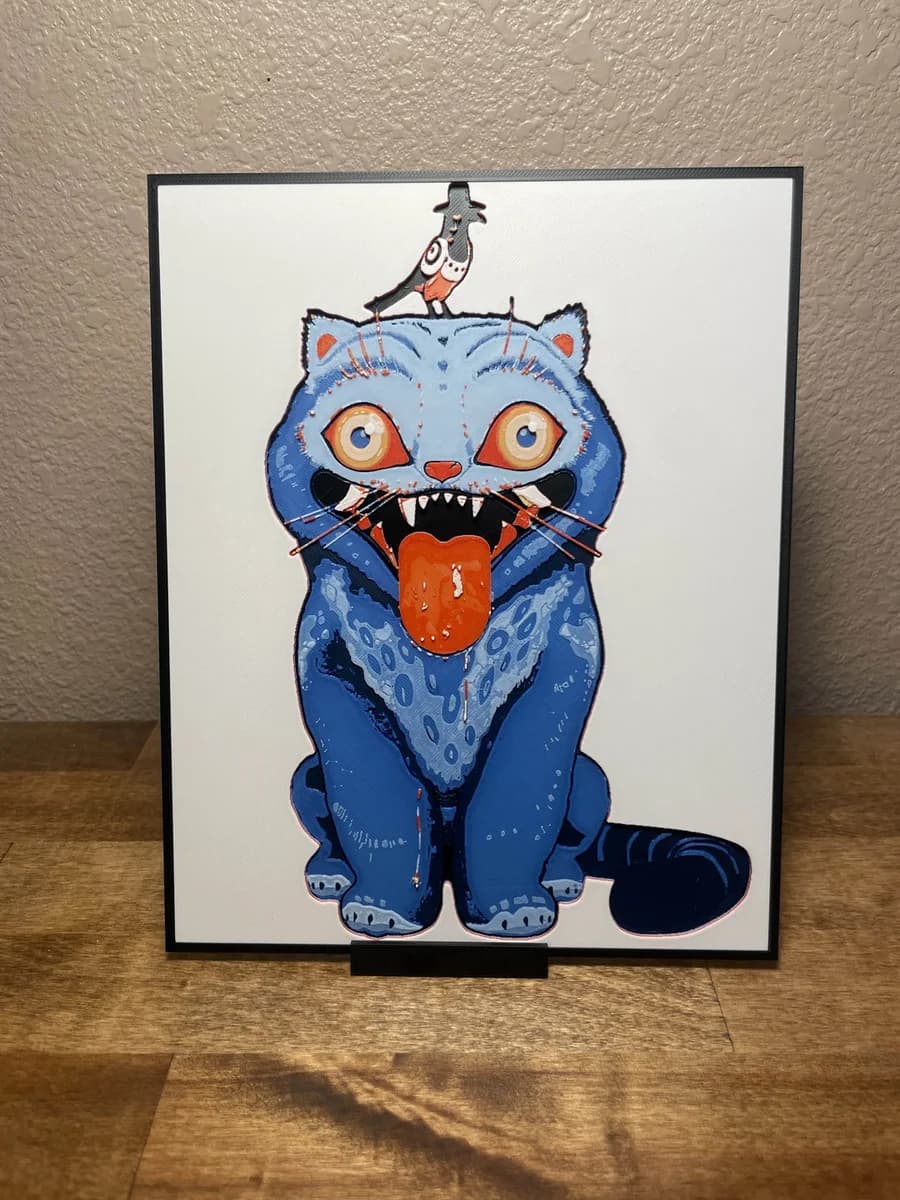
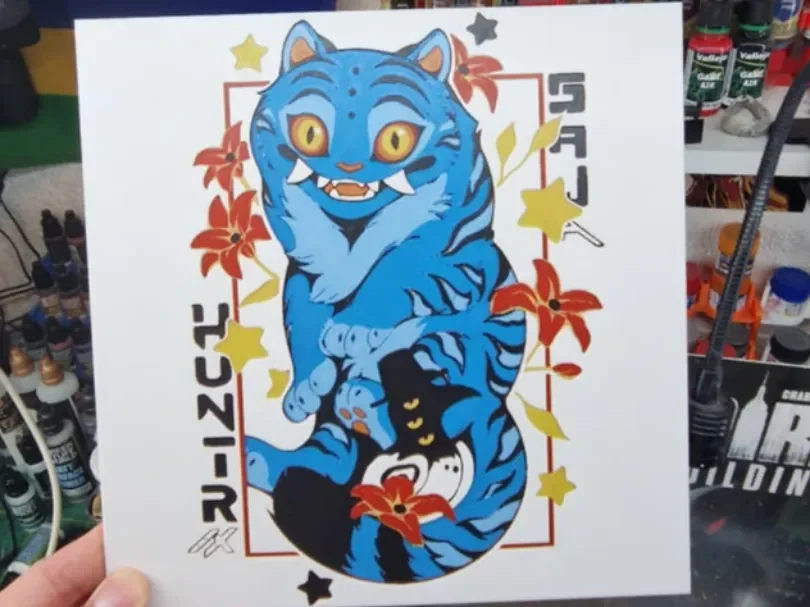
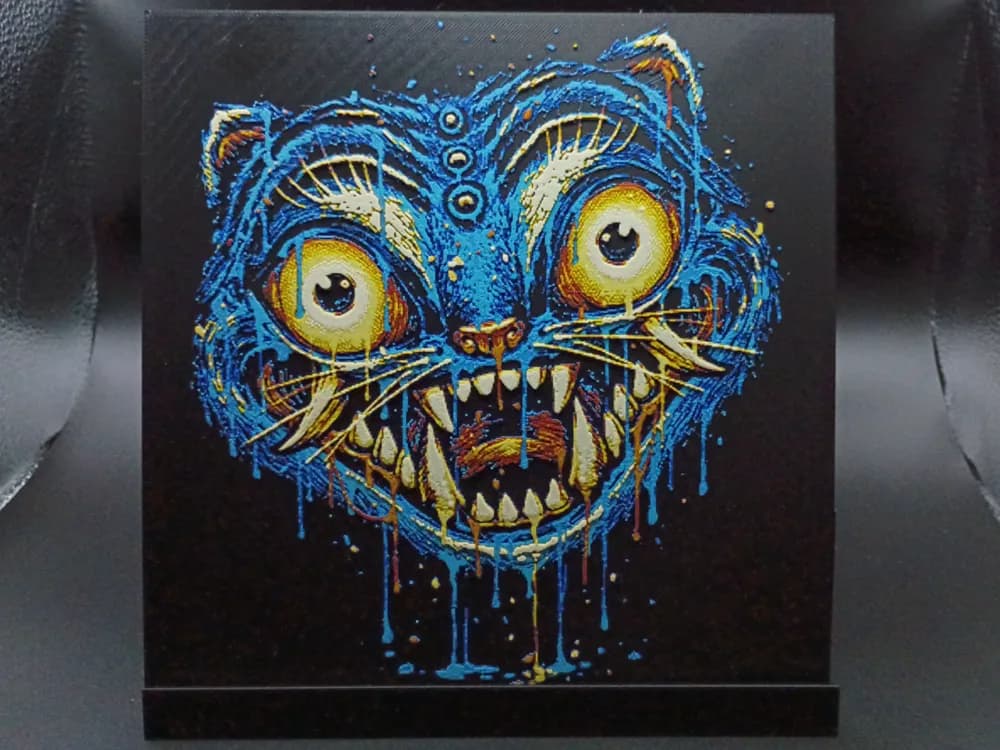
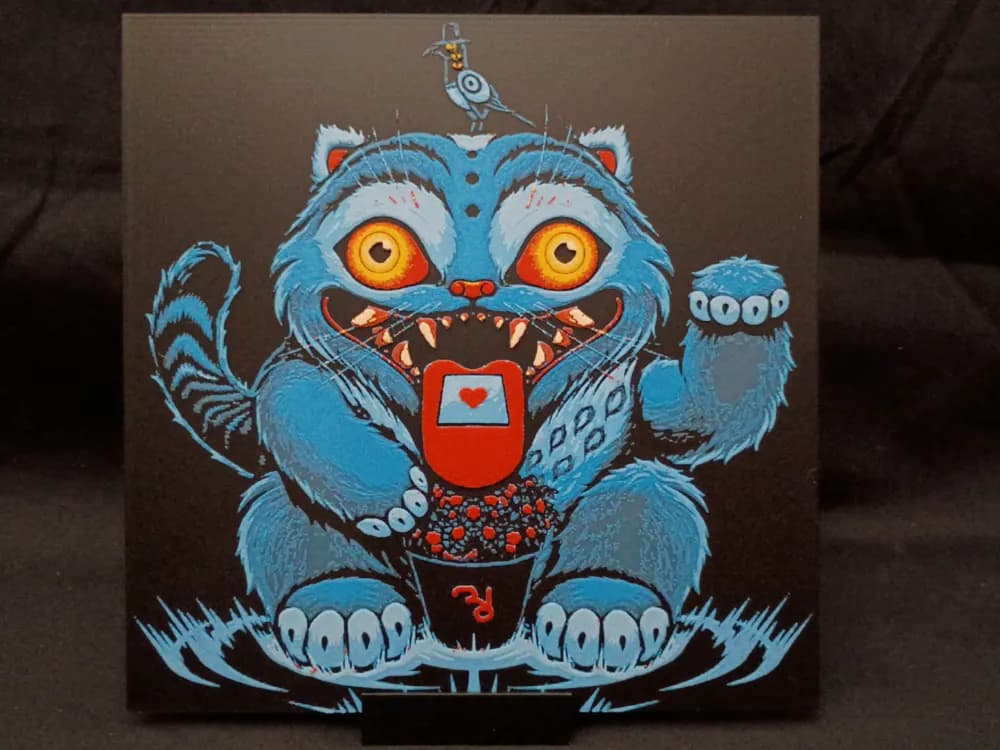
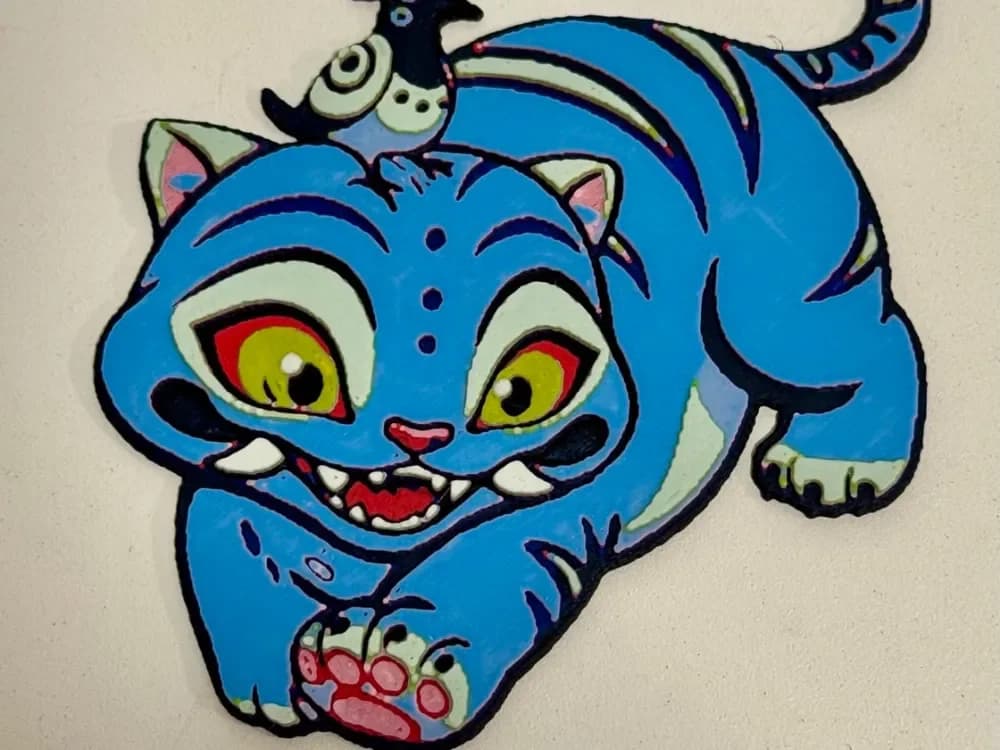
Derpy Cat is Jinu's blue tiger. Sussie is his six-eyed magpie. They arrive with the Saja Boys — which puts them firmly in the demon faction at the start of the film — and then Derpy's arc pulls him toward Rumi's side. That crossing-over is what makes these two the warmest prints in the franchise. They're not on either side of the conflict in a way that makes them feel like a faction choice. You can put a Derpy Cat print on the same shelf as a Huntrix portrait and it reads as the right call.
From a print standpoint they're also a different kind of challenge than the character portrait sections. Both designs are silhouette-forward — Derpy's blue-tiger coloring and Sussie's six-eyed magpie shape are built around distinctive form first, face second. That inverts the palette logic from the Huntrix section. Here the background and body relationship is more important than the face-to-hair separation. Derpy especially rewards a palette that has real depth in the blue-grey-white range — the tiger stripe definition lives or dies on how many distinct steps you have between the darkest part of the stripe and the coat's base color.
Sussie's six eyes are the natural focal point for the magpie prints, and they work the way Gengar's grin works — lowest-TD layer, placed to read against a dark field. If you've printed Gengar before, Sussie is familiar territory.
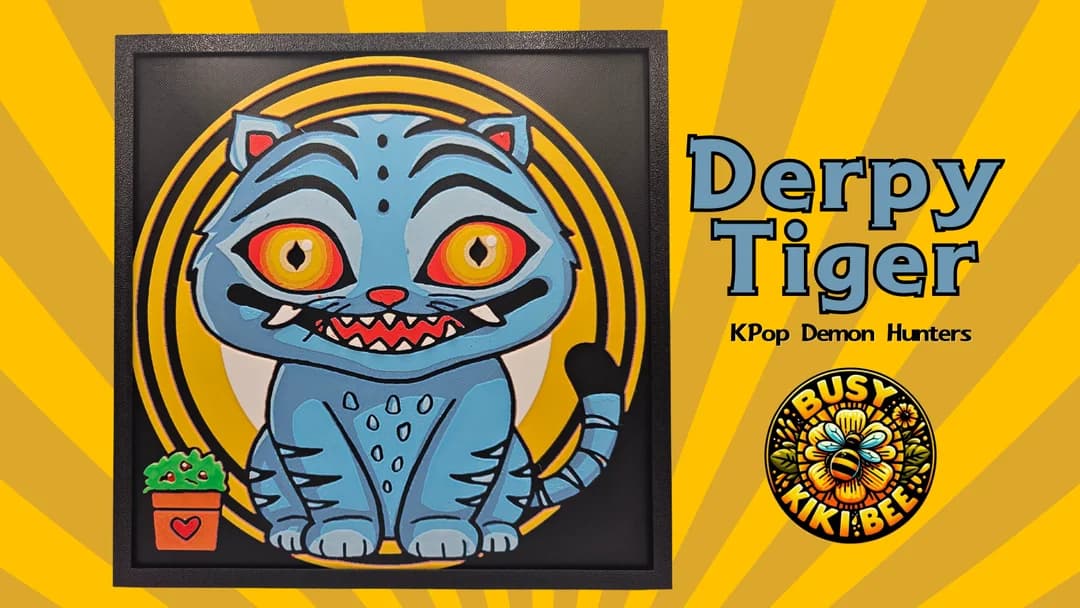
Browse all Derpy Cat & Sussie models in the HuePick catalog →
Bookmarks
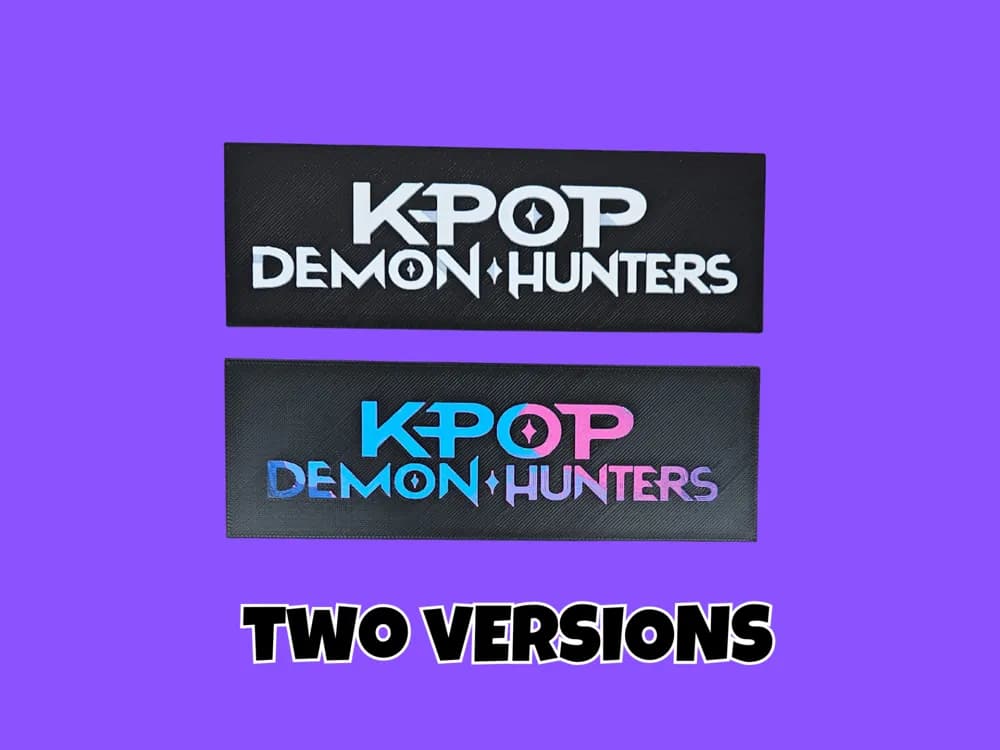
The bookmarks are the entry-point section of the KPop Demon Hunters catalog. Smaller format, lower color count, and a functional object at the end — you can print a Huntrix or Saja Boys bookmark and actually use it while you figure out whether you want to commit to a full portrait. That's a genuine low-stakes way into the franchise's palette logic before you tie up your AMS for a four-hour portrait run.
The other thing bookmarks do well here is capture the franchise's character graphic style at a scale where simplification is a feature, not a limitation. The idol-aesthetic designs in particular tend to be drawn in a clean two- or three-color illustrative style that reads better small than the fully-rendered portrait prints do. If you want something that looks deliberate at bookmark scale, these are the models that were designed for it.

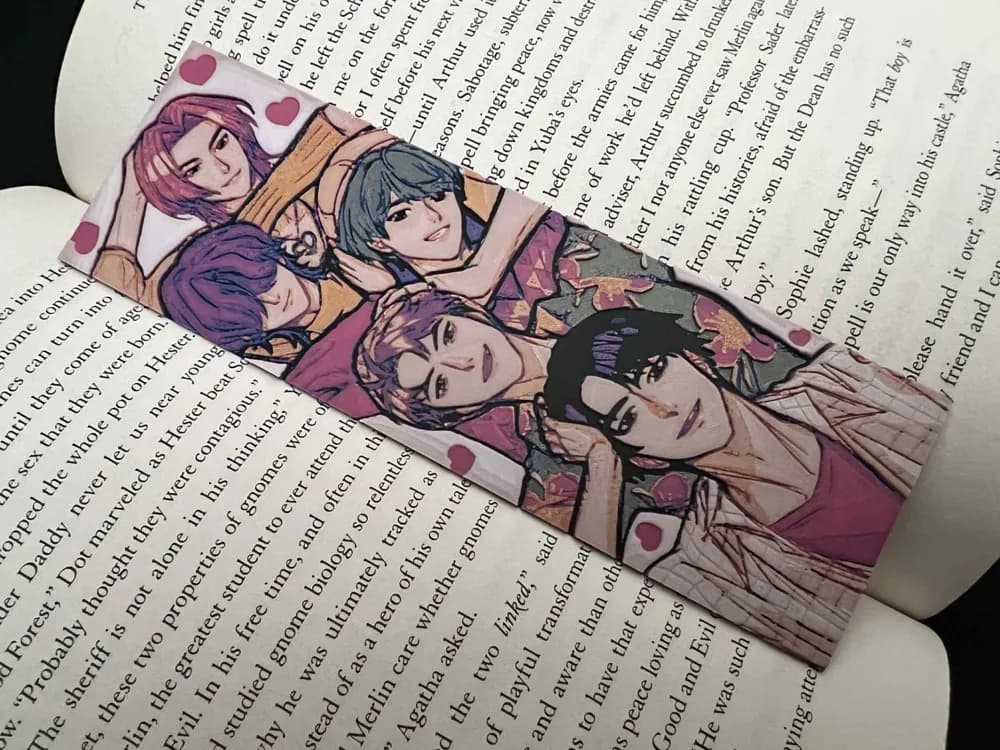
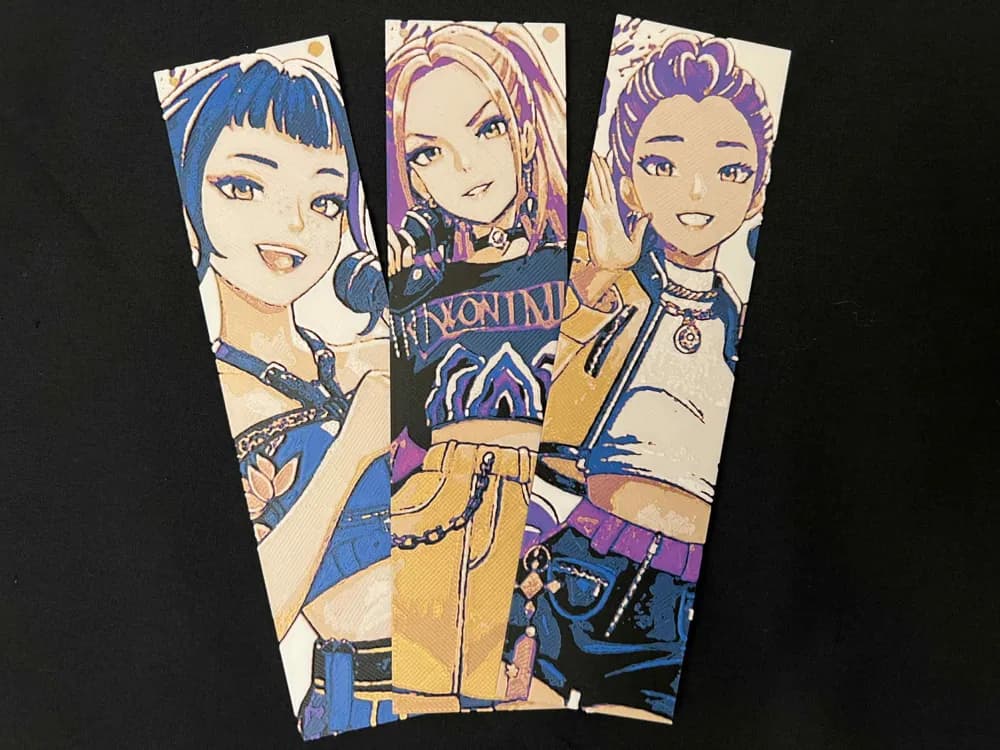
Browse all KPop Demon Hunters bookmarks in the HuePick catalog →
After the print
Once you've found a model from the sections above, palette construction is the work that actually determines the result. KPop Demon Hunters prints are more palette-sensitive than most franchise IP because the source material has such specific color logic — the Huntrix's idol aesthetic depends on particular combinations of skin tone, hair color, and saturated costume color that filament choices can support or undermine. The Choosing Filament Colors for HueForge guide walks through how to build a palette around a specific model's tonal structure rather than matching hues by eye.
Display matters differently here depending on which section you printed from. The Huntrix portraits and the Saja Boys both benefit from a steady ambient light source — backlit frames work, but so does a well-positioned shelf light. Derpy Cat and Sussie are the exception: Sussie's six-eyed focal point earns a backlight the way Gengar does. The How to Display 3D Printed Art at Home post covers the practical setups, including the cheap shadow-box rigs that work for both portrait and creature prints.
If your taste runs toward other franchise IP, a few sibling roundups are worth checking:
- Best Marvel STL Files — symbiotes, Avengers, iconic items
- Best Pokemon STL Files — Pokeballs, Gengar, Snorlax, Legendaries
- Best Star Wars STL Files — lightsabers, Mandalorian helmets, ships
And if you want to browse the full franchise section of the catalog rather than the curated picks above, the KPop Demon Hunters tag surfaces every model in the bucket — the four sections above plus whatever's been added since this article was written.
Pick one print, build your palette around the character's tonal logic rather than the source color, and hang it somewhere with a light source that matches how the design was built to read. That's the whole loop.