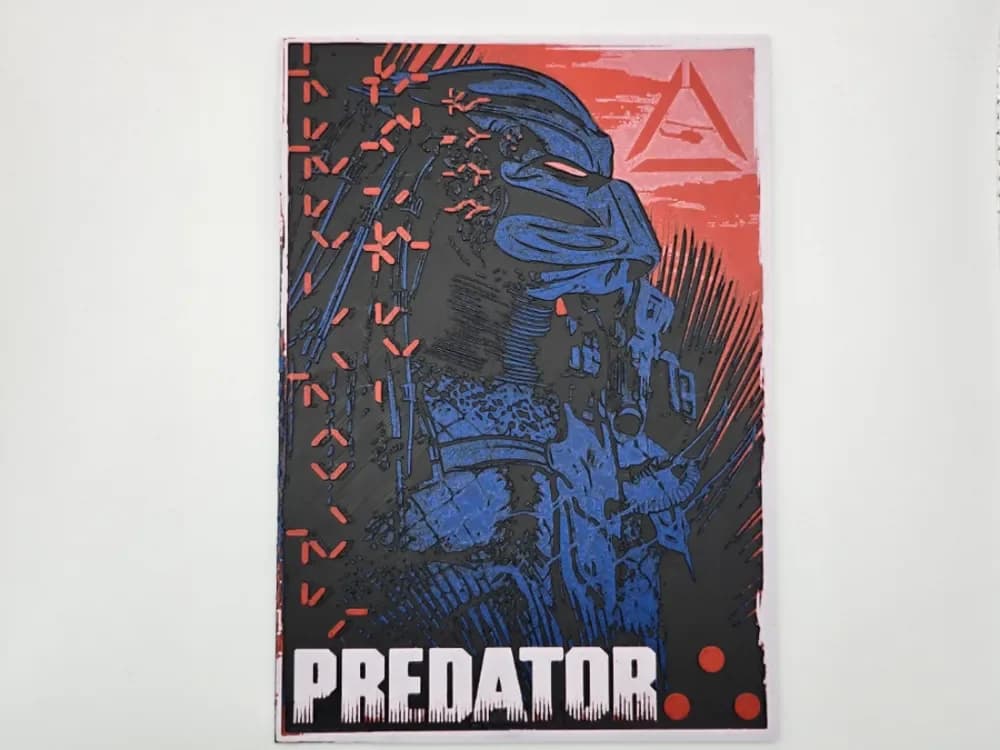
Predator
by Kactus Fpv
The iconic alien hunter emerges from shadow in this striking tribute to the legendary extraterrestrial warrior. Kactus Fpv's design captures the Predator's fearsome biomask and distinctive dreadlocks through bold contrasts of deep blues and blacks against a dramatic red backdrop. Intricate crosshatching and geometric patterns create texture and depth, while the creature's imposing silhouette dominates the composition with menacing presence and sci-fi atmosphere.
View on MakerWorldRequired Filaments4
Bambu Lab Basic Black
Bambu Lab Basic Jade White
Bambu Lab Basic Blue
Bambu Lab Basic Red
Why filament details may vary
Filament details (brand, color, and TD value) may not exactly match the designer's original specification. In some cases, the designer didn't specify exact filaments and we've matched the closest options we could find. Always check the original listing for full details.
Some filament links are affiliate links — we may earn a small commission at no extra cost to you. Learn more
Sign up to track your filament inventory and check your matches.
Create accountYou Might Also Like
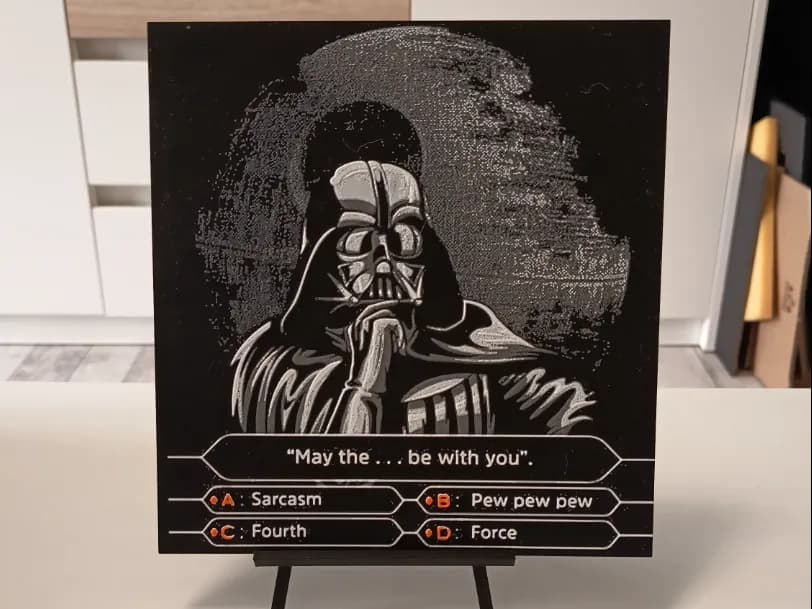
Darth Vader Quiz Hueforge
by 3DNesy
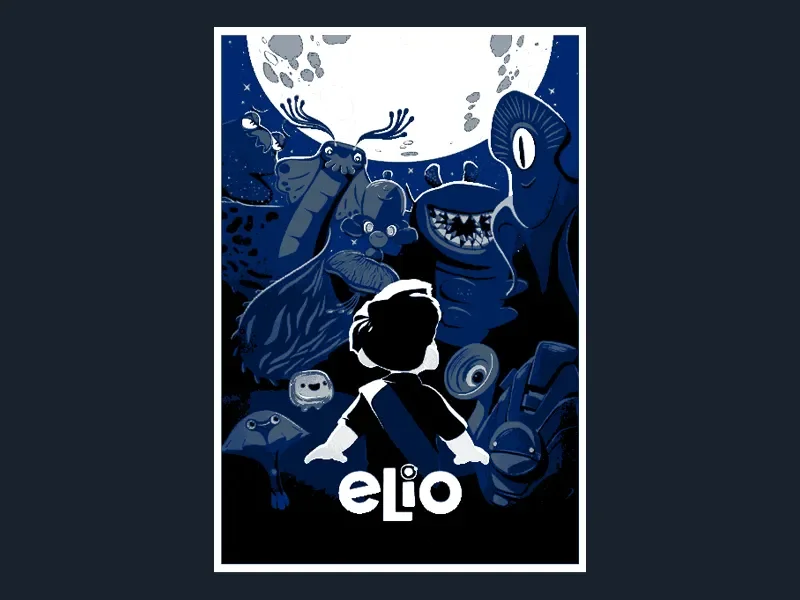
Elio (Movie Poster - HueForge)
by HugheCraft
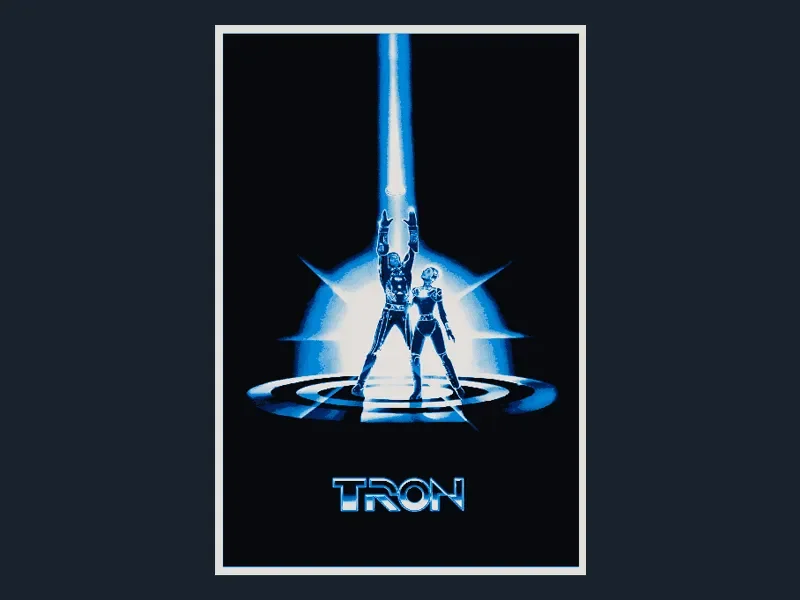
Tron (Movie Poster - HueForge)
by HugheCraft
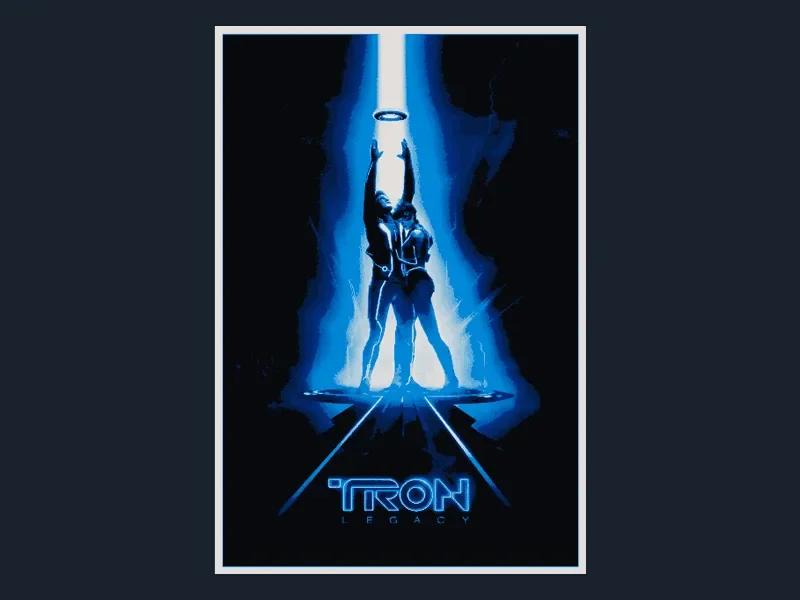
TRON: Legacy (Movie Poster - HueForge)
by HugheCraft
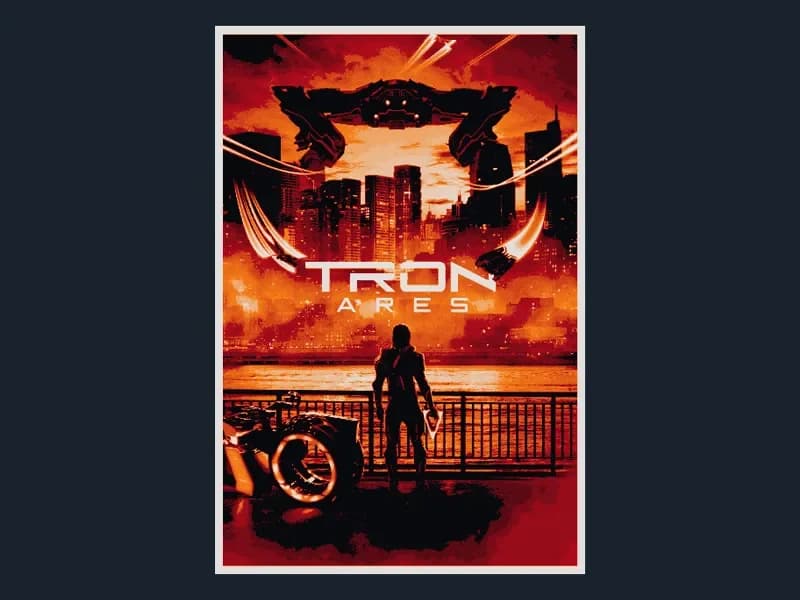
TRON: Ares (Movie Poster - HueForge)
by HugheCraft
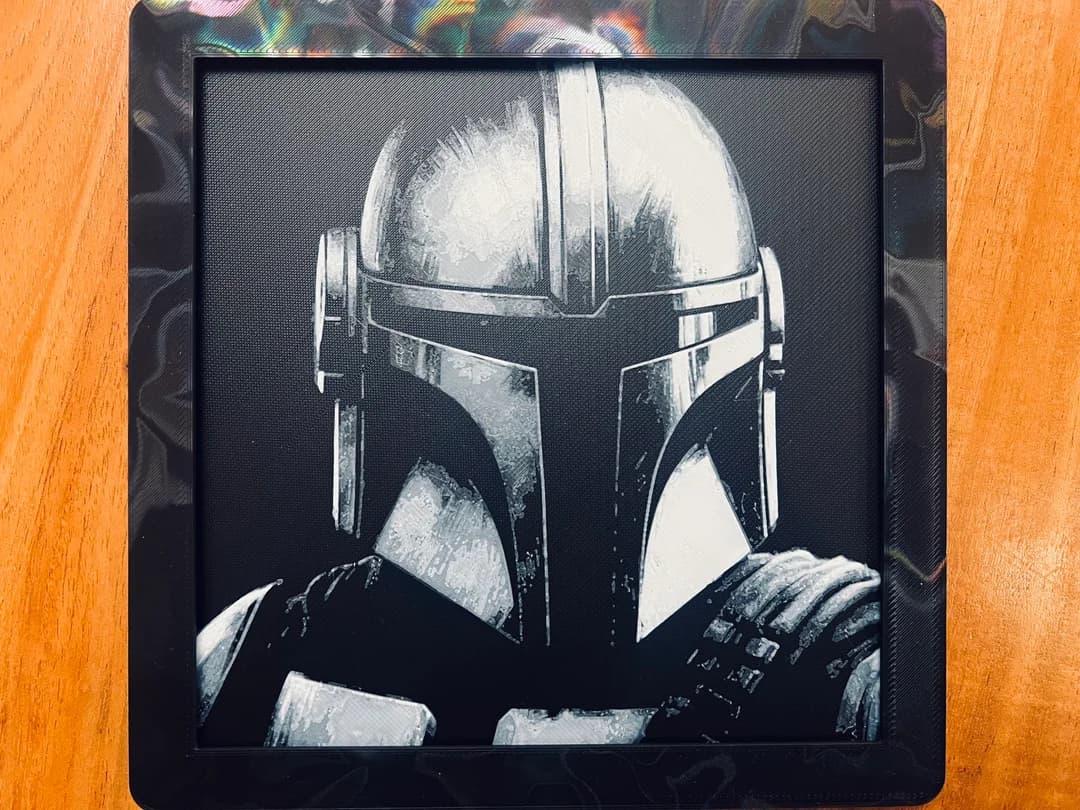
Mandalorian Close Up(Black and White)
by JustBe 3D Printing
Recent Articles
View all
Best Car 3D Prints for HueForge: From Japanese Icons to Movie Cars
The best car 3D prints to make as HueForge filament paintings — JDM legends, supercars, American muscle, F1 and rally posters, and movie icons like the DeLorean, each linked in the HuePick catalog.
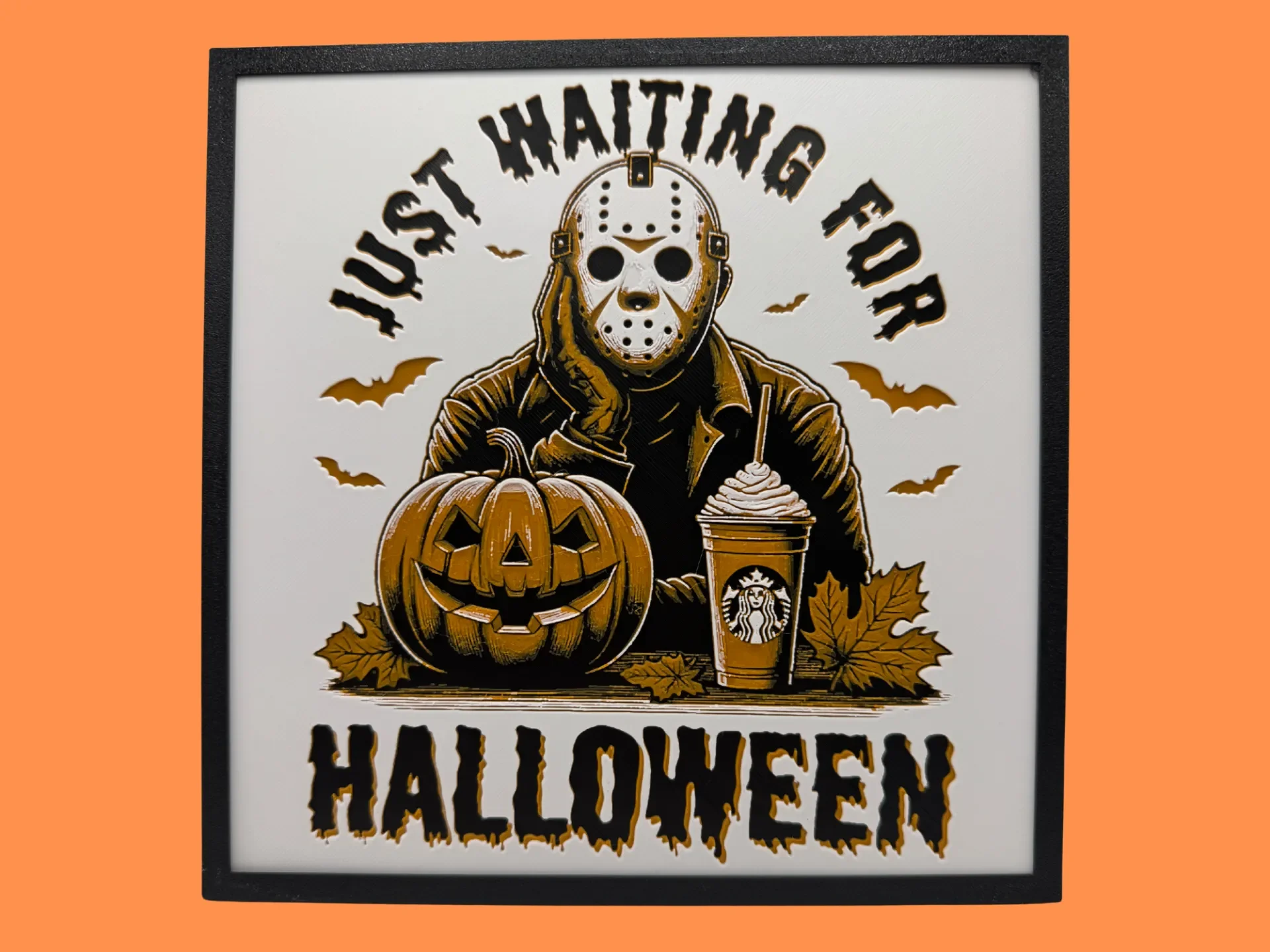
Best Halloween & Horror 3D Prints for HueForge: Slashers, Skulls & Spooky Wall Art
The Halloween 3D prints worth making as HueForge filament paintings — horror movie posters, Ghostface and Pennywise, skulls, pumpkins, spooky Pokemon, and bookmarks, grouped by theme.
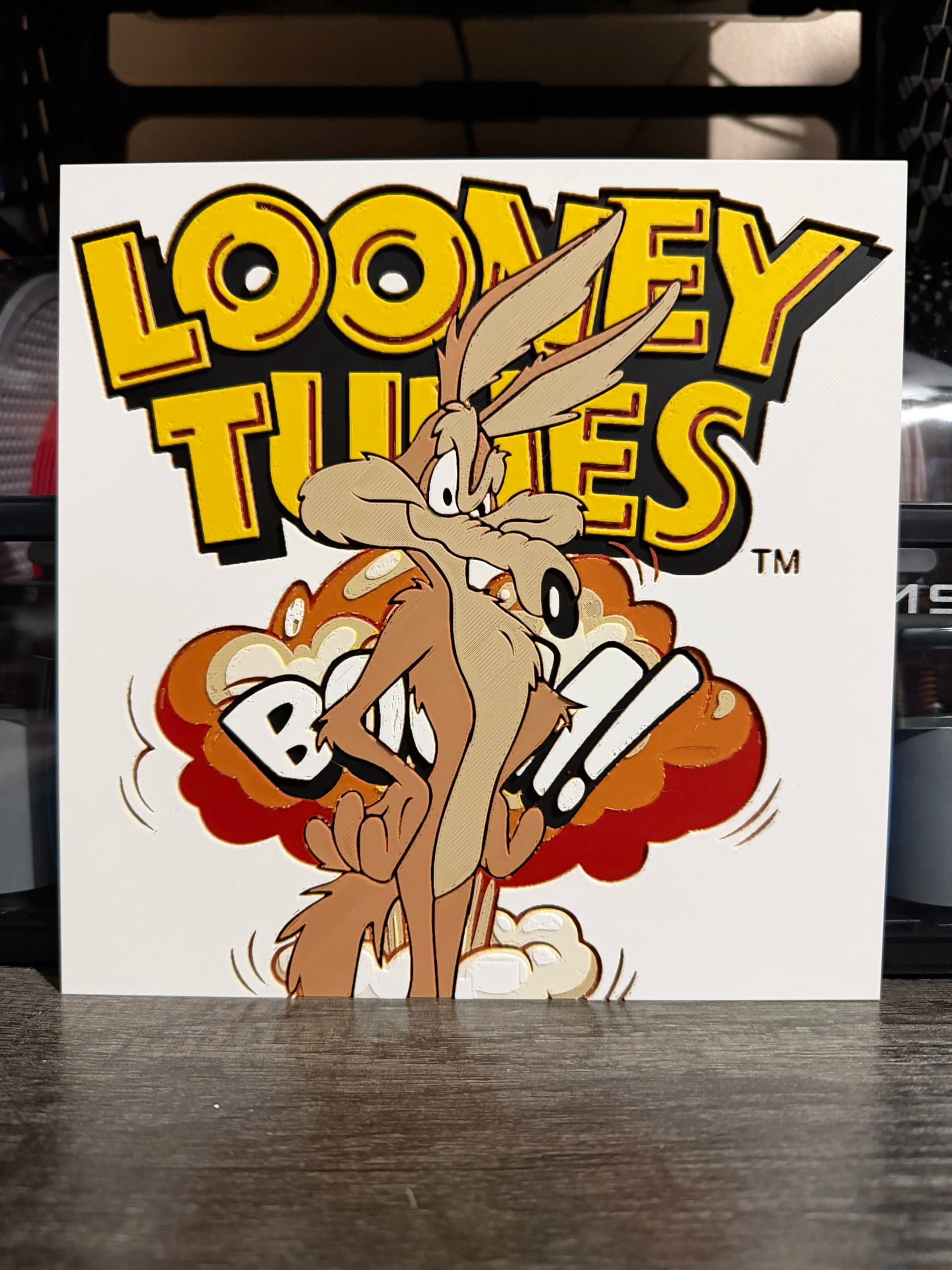
Best Classic Saturday Morning Cartoon STL Files for HueForge
The best classic Saturday morning cartoon STL files for HueForge — Scooby-Doo, Looney Tunes, Transformers, He-Man, TMNT and more, as bold filament wall art.