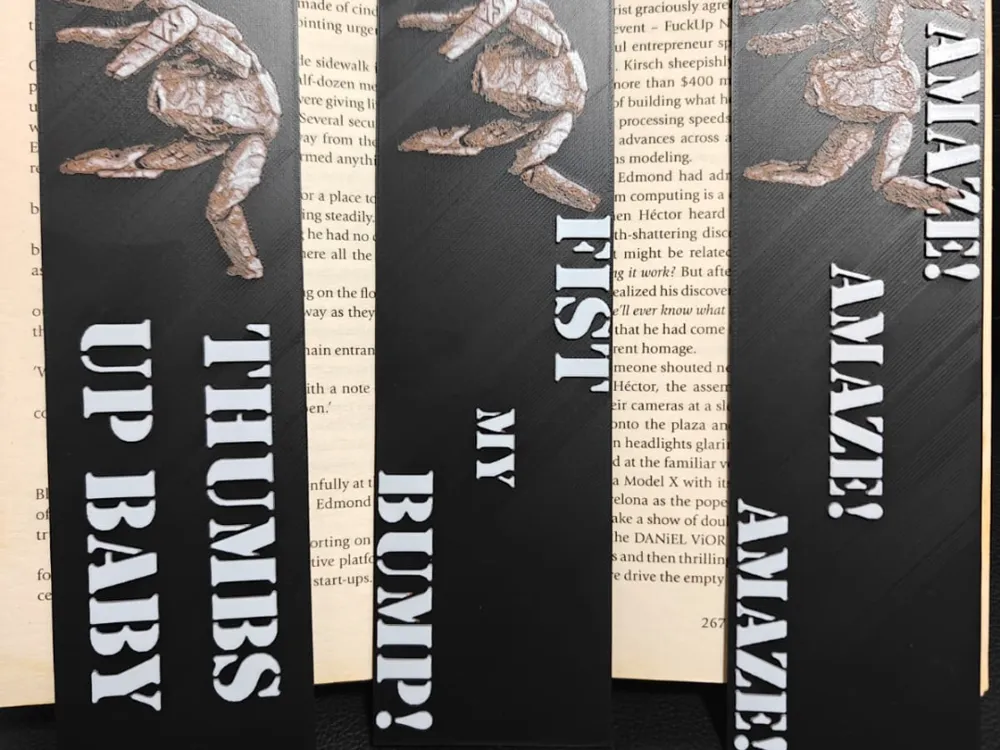
Rocky Project Hail Mary Set Bookmark
Rocky, the beloved Hailmary from Andy Weir's "Project Hail Mary," takes center stage in this charming bookmark design. The alien's distinctive crystalline form is rendered in soft peachy tones against deep black bands, creating striking contrast with crisp white typography. Each bookmark features Rocky's geometric body structure, capturing the endearing character who helped save humanity in Weir's acclaimed novel.
View on MakerWorldRequired Filaments3
Bambu Lab Basic Black
Bambu Lab Basic Brown
Bambu Lab Basic Jade White
Why filament details may vary
Filament details (brand, color, and TD value) may not exactly match the designer's original specification. In some cases, the designer didn't specify exact filaments and we've matched the closest options we could find. Always check the original listing for full details.
Some filament links are affiliate links — we may earn a small commission at no extra cost to you. Learn more
Sign up to track your filament inventory and check your matches.
Create accountYou Might Also Like
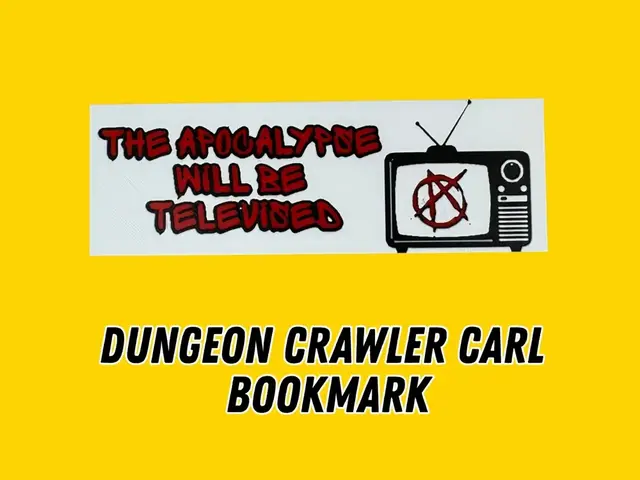
The Apocalypse Will Be Televised - DCC Bookmark
by Canadian Gamer
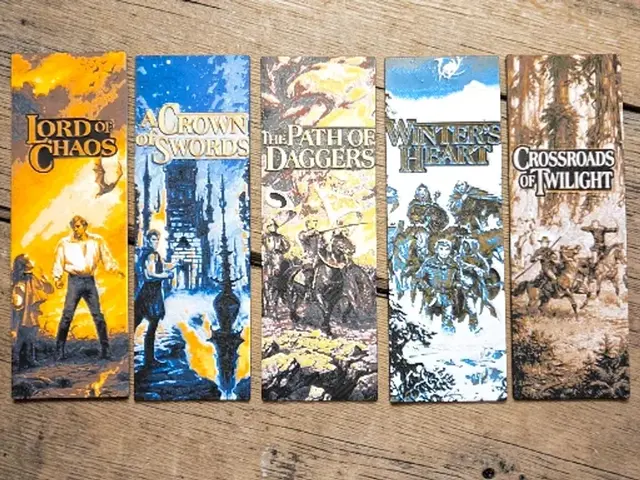
Wheel of Time 6-10
by MythicHue's
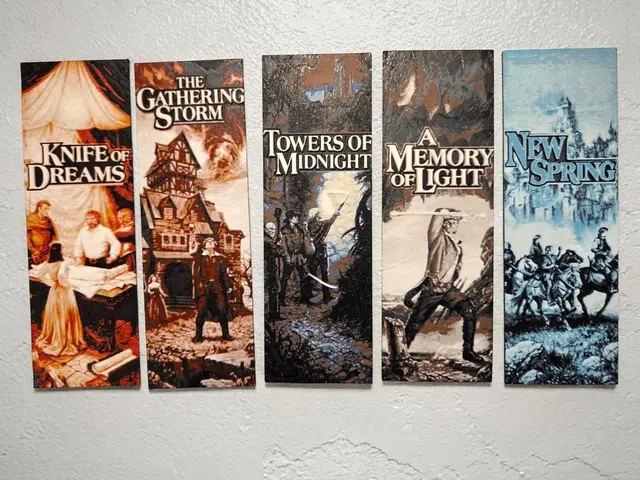
Wheel of Time 11-15
by MythicHue's
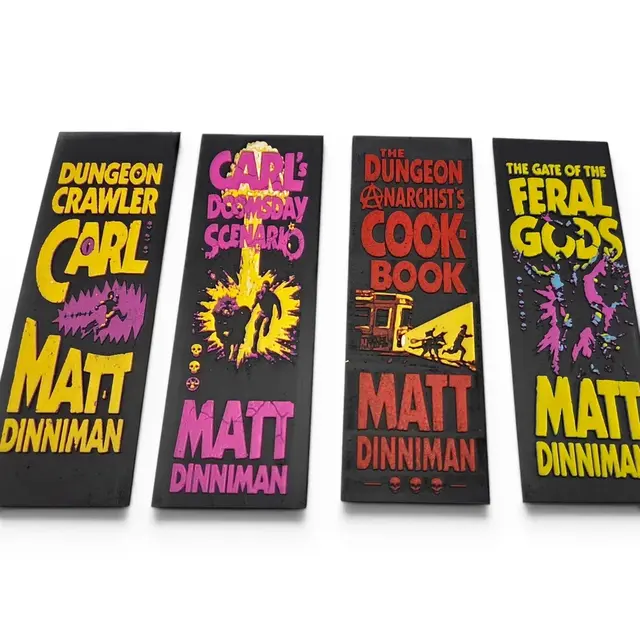
Patreon June Release: Dungeon Crawler Carl
by MythicHue's
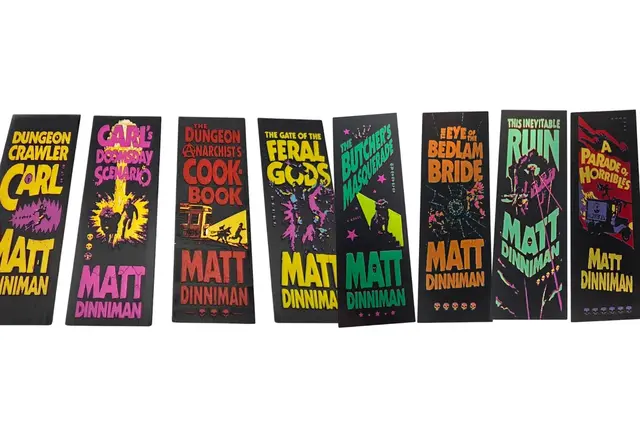
🦖📚 Dungeon Crawler Carl Series Complete! (+ Bonus MakerWorld Release) 🍩🐱
by MythicHue's
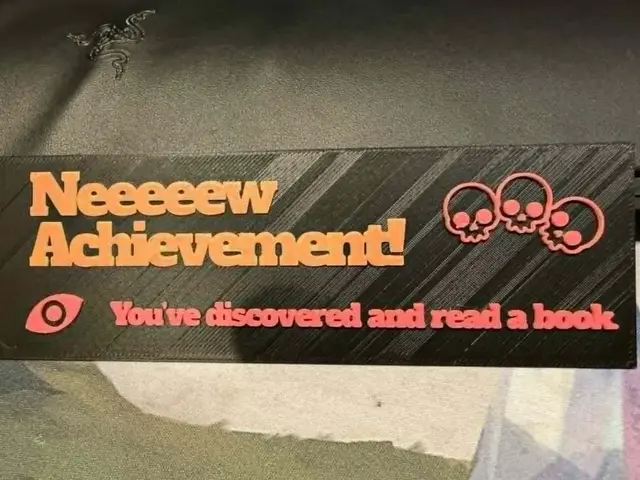
Dungeon Crawler Carl - New Achievement Bookmark
by IslandLooter
Recent Articles
View all
Best Anime 3D Prints for HueForge: From Shōnen Classics to the Modern Wave
The best anime 3D prints to make as HueForge filament paintings — One Piece, Naruto, Dragon Ball, Demon Slayer, Jujutsu Kaisen, Frieren, Gundam, and anime bookmarks, each linked in the HuePick catalog.

Best Car 3D Prints for HueForge: From Japanese Icons to Movie Cars
The best car 3D prints to make as HueForge filament paintings — JDM legends, supercars, American muscle, F1 and rally posters, and movie icons like the DeLorean, each linked in the HuePick catalog.

Best Halloween & Horror 3D Prints for HueForge: Slashers, Skulls & Spooky Wall Art
The Halloween 3D prints worth making as HueForge filament paintings — horror movie posters, Ghostface and Pennywise, skulls, pumpkins, spooky Pokemon, and bookmarks, grouped by theme.