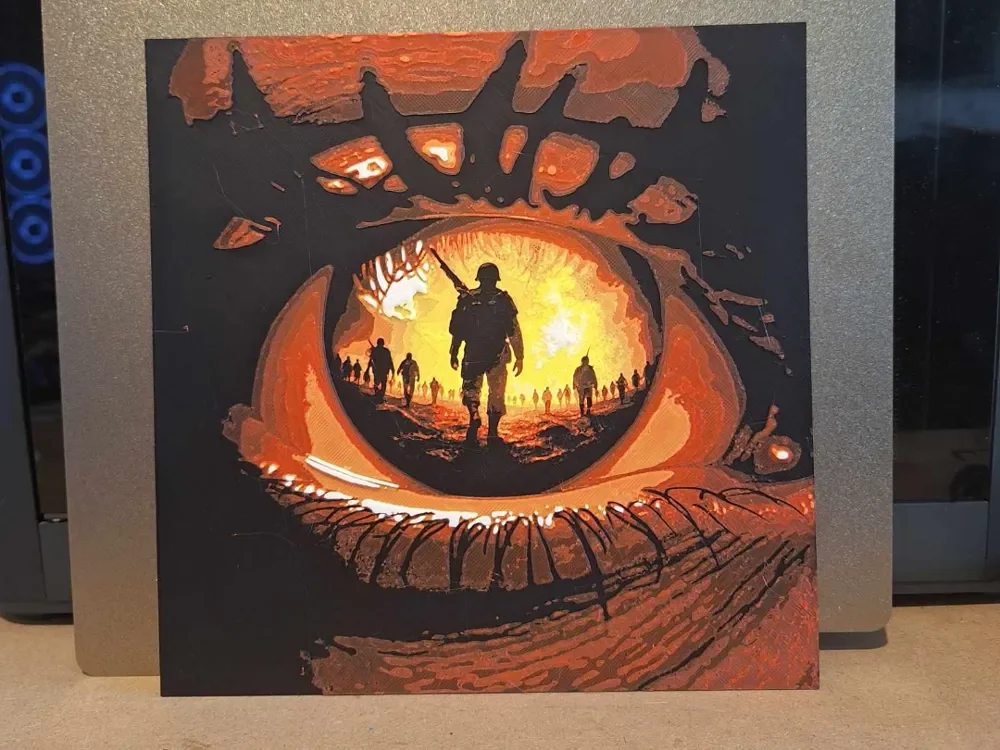
Through the eye - hueforge - 4 colour
by 3dGlow
A weathered eye becomes a window to an apocalyptic vision, its iris reflecting silhouetted figures marching through flames. The dramatic composition uses warm oranges and fiery reds against deep blacks to create layers of meaning—the observer and the observed merge in this haunting scene. Cracked skin and detailed textures frame the central pupil, where a lone soldier leads his squad through burning devastation, transforming the act of seeing into a powerful statement about witnessing conflict.
View on MakerWorldRequired Filaments4
Why filament details may vary
Filament details (brand, color, and TD value) may not exactly match the designer's original specification. In some cases, the designer didn't specify exact filaments and we've matched the closest options we could find. Always check the original listing for full details.
Some filament links are affiliate links — we may earn a small commission at no extra cost to you. Learn more
Sign up to track your filament inventory and check your matches.
Create accountYou Might Also Like
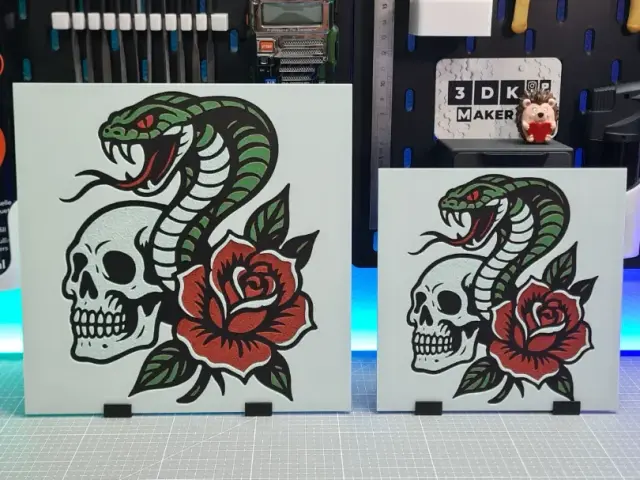
Skull Cobra Flower Tattoo – Hueforge – 4 Colors
by Montoya Maker
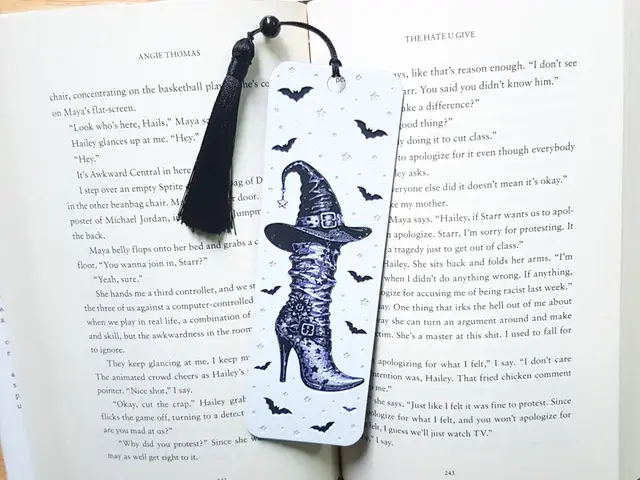
Bookmark, Witch's Boot, Halloween
by Dame Jo
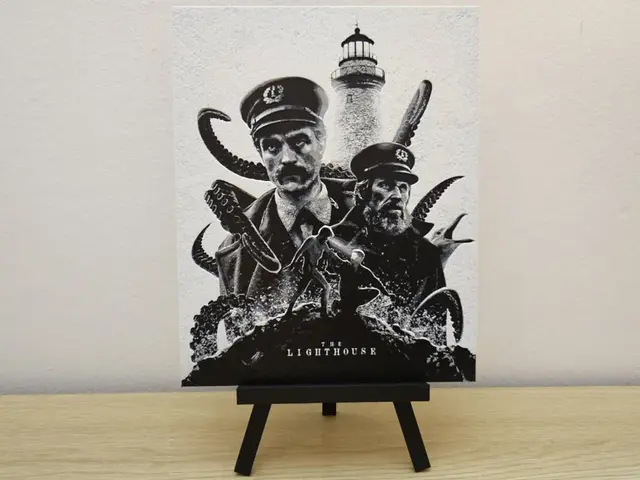
Lighthouse Hueforge
by Opao
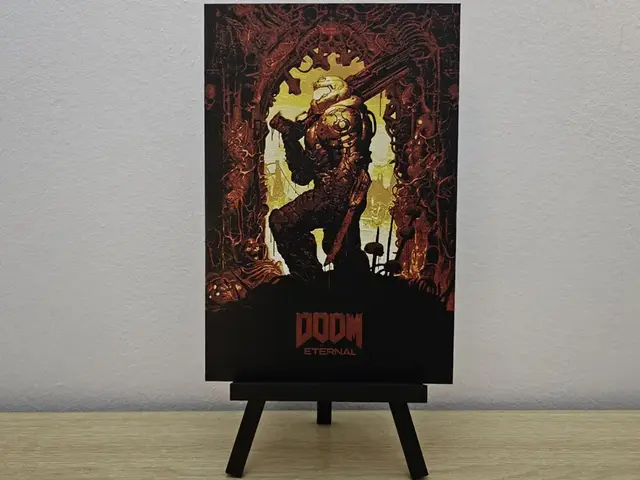
Doom Eternal Hueforge
by Opao
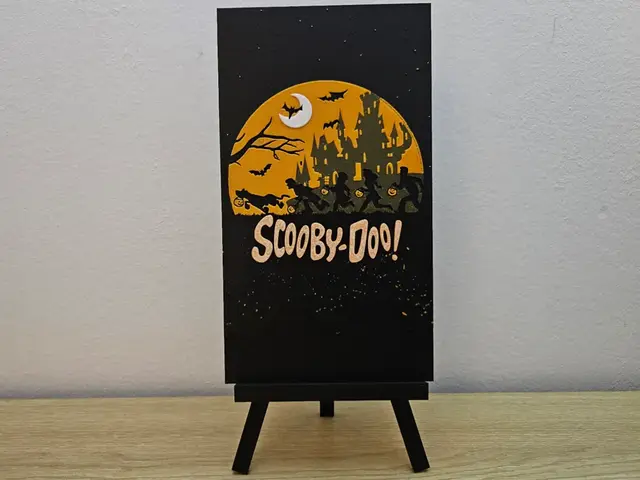
Scooby Doo Halloween Hueforge
by Opao
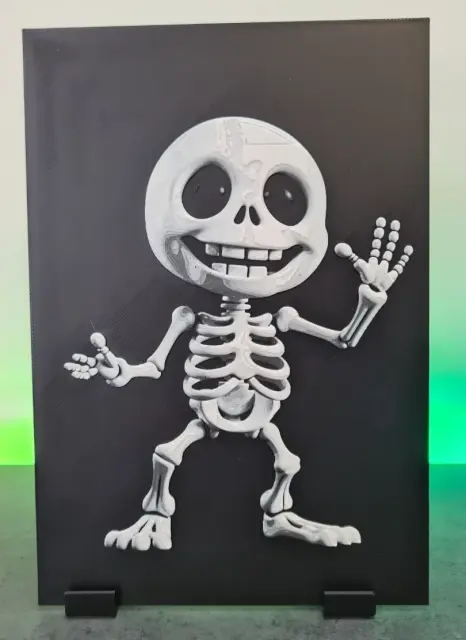
Skeleton Hello Hueforge
by Montoya Maker
Recent Articles
View all
Best 3D Printed Gifts for Everyone on Your List — Made with HueForge
The best 3D printed gifts for everyone on your list, made with HueForge — custom pet and portrait art, ornaments and gift tags, bookmarks, and fandom prints matched to the recipient, plus how to turn gift requests into income.

Best Christmas 3D Prints for HueForge: Ornaments, Santa & Holiday Movie Posters
The Christmas 3D prints worth making as HueForge filament paintings — tree ornaments, Santa and snowmen, holiday movie posters, festive fandom crossovers, and gift tags, grouped by theme.
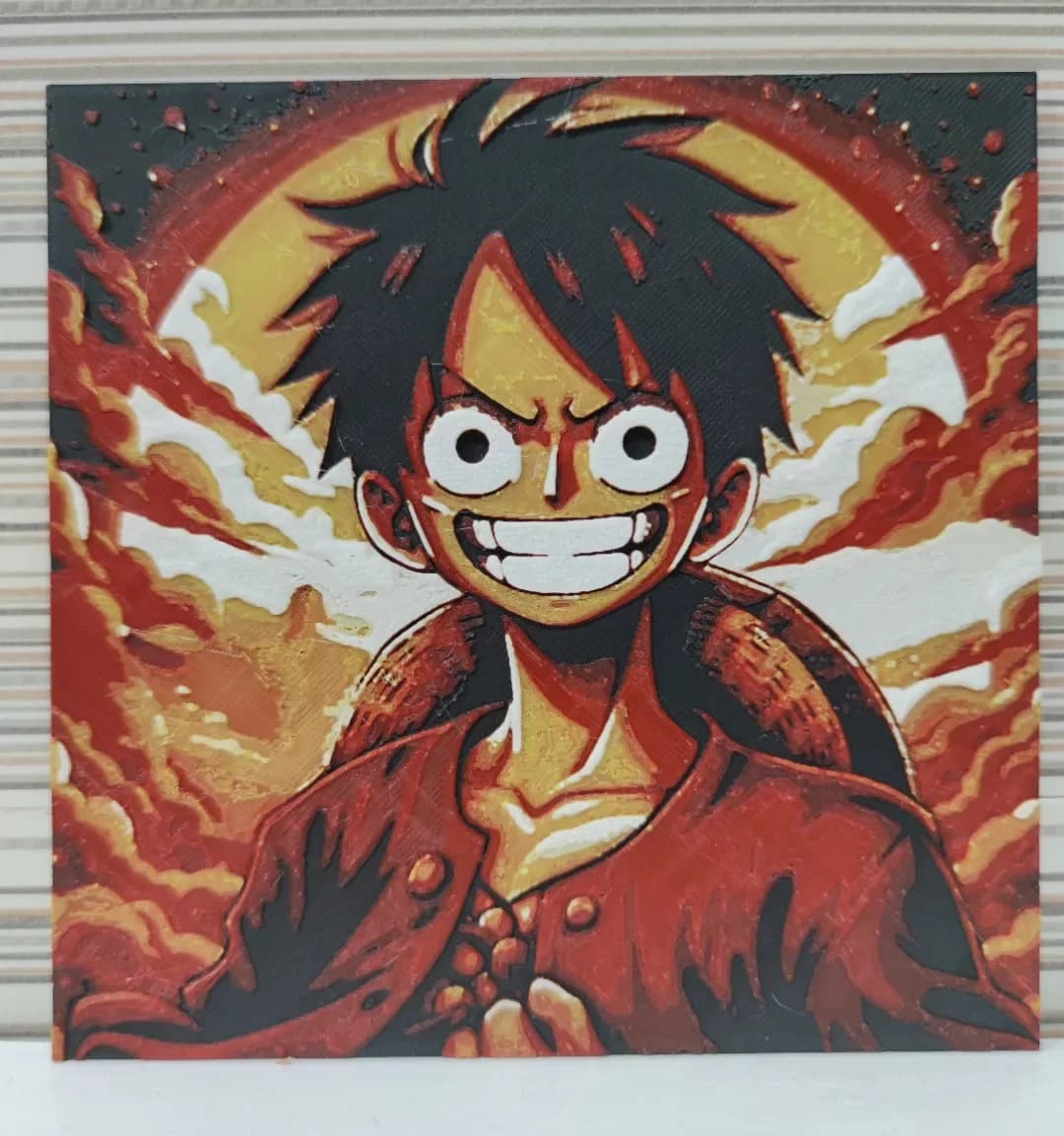
Best Anime 3D Prints for HueForge: From Shōnen Classics to the Modern Wave
The best anime 3D prints to make as HueForge filament paintings — One Piece, Naruto, Dragon Ball, Demon Slayer, Jujutsu Kaisen, Frieren, Gundam, and anime bookmarks, each linked in the HuePick catalog.