Best 3D Prints to Sell: What Actually Moves for HueForge Makers
The 3D prints that actually sell for HueForge makers — pets, landscapes, and personalized wall art — plus the subjects you can print but legally cannot sell.
Quick Answer
The 3D prints that sell best for HueForge makers are not mass-market fidgets — they are wall-art-format filament paintings with strong subjects: pets, landscapes, sports, and personalized pieces from a buyer's own photo. The catch is that subject choice does more work than print quality, and the most-searched subjects (licensed characters like Pokémon and Marvel) are usually the ones you cannot legally sell.
You've got the printer dialed in and you want it to earn its keep. So which prints actually sell — not "get likes" on Reddit, but sell, for money, to a stranger? Most lists answer with the same commodity plastic: fidgets, cable clips, another Baby Groot. That advice is fine if you want to race a filament farm to the bottom on price. It's the wrong advice for a HueForge maker.
Your edge isn't churning out functional objects. It's filament painting — art pieces with a depth people can't get from a poster or a resin figurine. This guide covers which subjects turn that edge into sales, why the subject you pick matters more than your color count, and the one thing that quietly sinks most maker shops: selling prints you don't actually have the right to sell.
This is written for someone deciding what to put on the table this weekend — what sells, what sells well, what's easy to start with, and what to avoid.
What Kinds of 3D Prints Actually Sell?
The prints that sell consistently fall into two buckets: useful things (organizers, stands, practical desk objects) and decorative things (wall art, display pieces). For a HueForge maker, the decorative bucket is where the money is — because a filament painting isn't a commodity the buyer can grab from ten other booths for a dollar less.
Functional prints compete almost entirely on price. The internet is saturated with $3 fidgets and phone stands, and the only way to win there is on volume and cost per unit — which means competing against people running six printers in a garage. That's a manufacturing business, not an art business, and it's a hard place to make a margin.
HueForge sidesteps that fight. The value of a filament painting is the image and the way light moves through it, not the plastic it's made of. That's much harder to copy and much easier to charge real money for. A buyer looking at a backlit landscape isn't comparing your price to a fidget — they're comparing it to a framed print, and framed prints cost a lot more than filament.
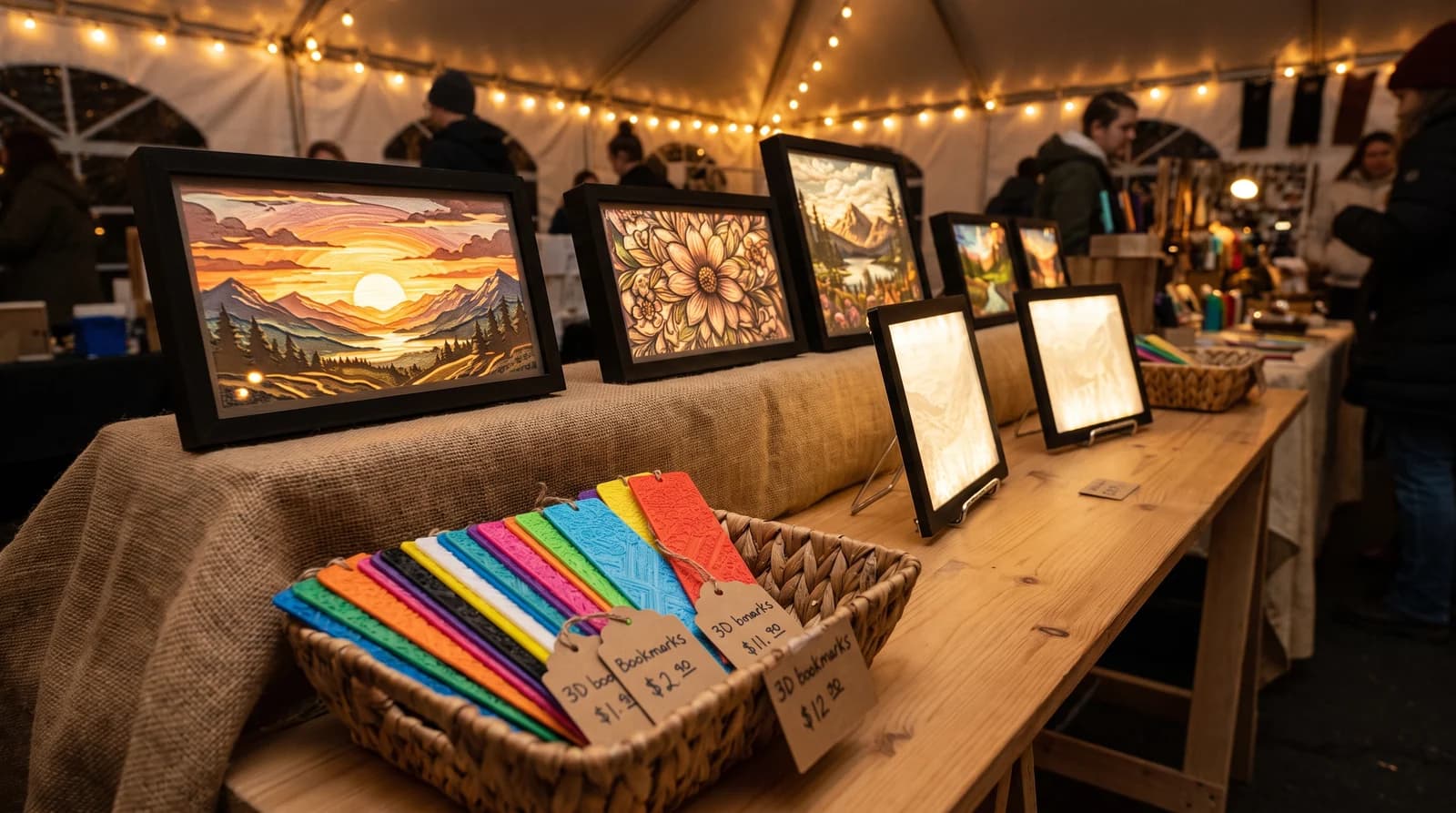
That said, decorative work wins on margin but not on foot traffic. Small useful items — the $8 impulse buys — are what pull people to your booth and get your work into their hands. A table that's all high-priced art and no impulse buys leaves money on the floor. The strongest setups carry both: art for the margin, small stuff for the volume.
What Are the Best-Selling Subjects for Filament Painting?
Four subjects sell most reliably as HueForge prints: pets and portraits, landscapes and local scenes, sports teams and logos, and personalized pieces made from a buyer's own photo. What they share is a buyer with a specific, emotional reason to own that exact image — which is what separates a sale from a compliment.
Pets and portraits convert better than anything else. People will pay for a print of their dog in a way they never will for a generic one. It's the most natural commission work you can offer, and the emotional pull does the selling for you.
Landscapes and local scenes are the quiet workhorses. A national park, a city skyline, the local lighthouse — these sell especially well at regional fairs, where "that's our mountain" closes the sale before you've said a word.
Sports and logos have strong, steady demand, but they're also the sharpest legal minefield on this list. Hold that thought — it gets its own section below.
Personalized, photo-to-print work is the premium tier. A custom HueForge made from a customer's photograph commands your highest price and has almost no direct competition, because no one else can make that exact piece.
One principle cuts across all four: the subject matters more than the resolution. A crisp, high-contrast subject printed in four colors will outsell a muddy six-color showpiece every time. If your palette is tight, choose subjects with strong tonal separation rather than reaching for more spools. The Choosing Filament Colors for HueForge guide walks through how to build a palette around a specific image instead of guessing.
What Are the Easiest 3D Prints to Start Selling?
Small-format prints — bookmarks, coasters, magnets, and desk-sized pieces — are the easiest entry point. They print fast, use very little filament, land squarely in the impulse-buy price range, and let you test which subjects your buyers respond to before you commit spools to a big piece.
The low material cost is the real advantage. You can print ten different subjects as bookmarks for the cost of one large wall piece, take them to a fair, and let the table tell you what sells. Then you scale the winners up to wall art with actual demand data instead of a hunch. Fast turnaround helps too — you can restock overnight after a good day.
There's also a pricing psychology at work. An $8 to $12 bookmark converts the browser who won't commit to a $60 framed piece, and it gets a physical example of your work into their hands. Some of those buyers come back for the wall art later.
Just don't mistake "easy to start" for "most profitable." Bookmarks build the audience; wall art builds the margin. Use the small stuff as a funnel, not as the whole business. The best bookmarks and small prints roundup is a good place to see what the format can do.
Which Subjects Should You Be Careful About Selling?
The most-searched, most-tempting subjects — Pokémon, Marvel, Star Wars, Disney, sports logos — are copyrighted, and selling prints of them is generally copyright and trademark infringement, even when you paid for the model file. They're popular to print. That's a different question from being legal to sell.
Here's the part that trips people up: a free download on MakerWorld doesn't grant you commercial rights to the character. The designer may have licensed you the model; nobody licensed you Pikachu. Printing one for yourself, or as a gift, sits in a very different legal position than putting it on a table with a price tag.
Printable is not the same as sellable
We list a lot of licensed-character models in the catalog — for printing, gifting, and display, which are a different legal question than resale. If your goal is a business, steer toward original art, public-domain subjects, nature and landscapes, and properly licensed or commissioned work. The safest ground is anything you created or clearly have the rights to: your own photography, public-domain images, nature and abstract subjects, and personal commissions where the buyer supplies the photo.
Why does this matter if plenty of booths sell fan art anyway? Because the risk scales with your success. A cease-and-desist, a marketplace takedown, or an account ban is unlikely when you sell three prints to friends — and much more likely once your shop grows enough to get noticed. Building your brand on subjects that can be pulled out from under you is a fragile foundation.
This isn't legal advice. Intellectual-property and trademark rules vary by country and by how you sell. If you're building a real shop around anything you didn't create, talk to an actual lawyer before you list it.
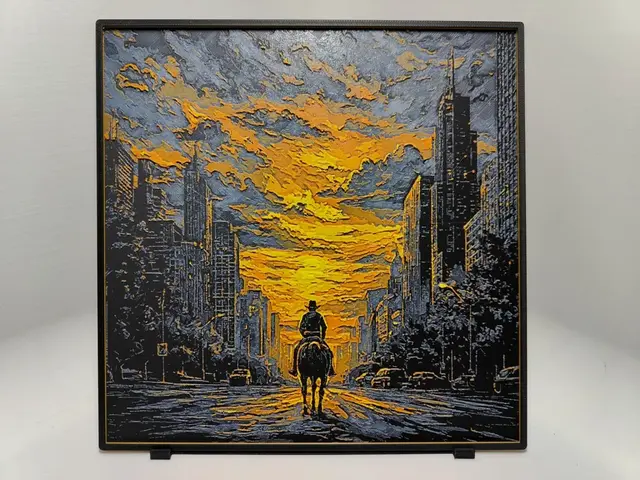
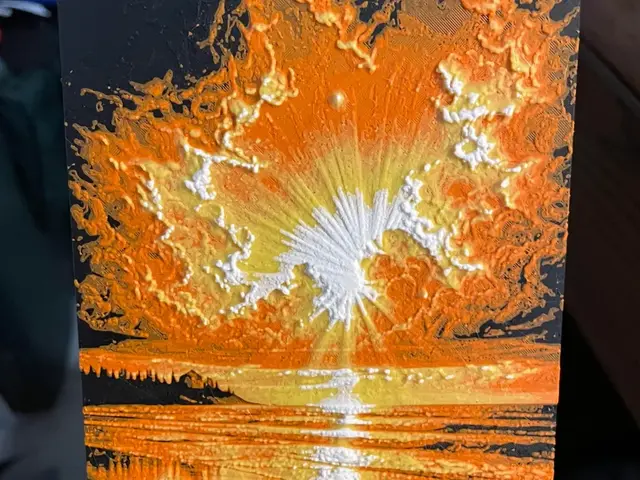
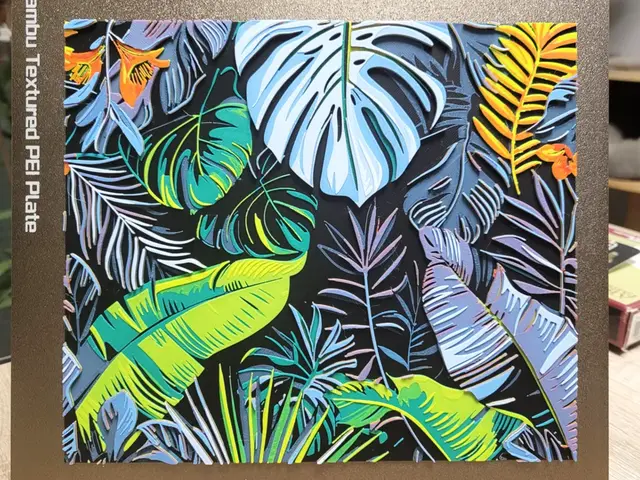
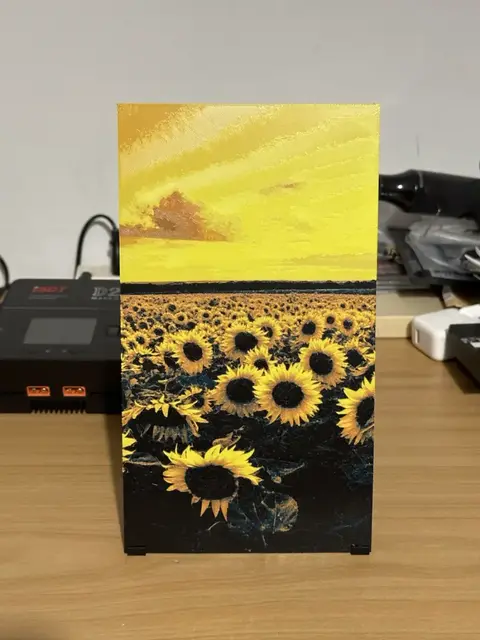
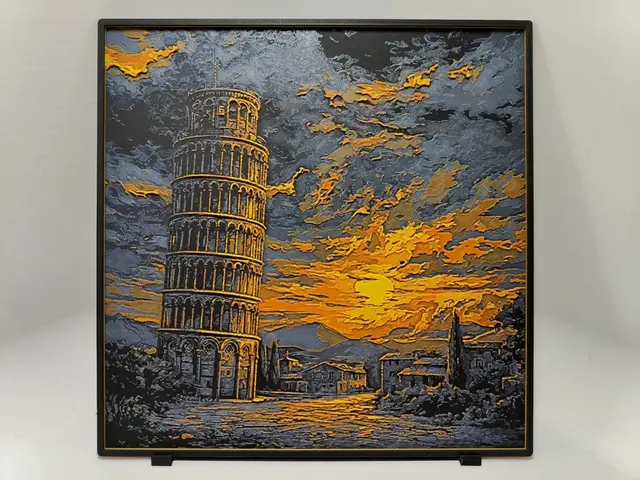
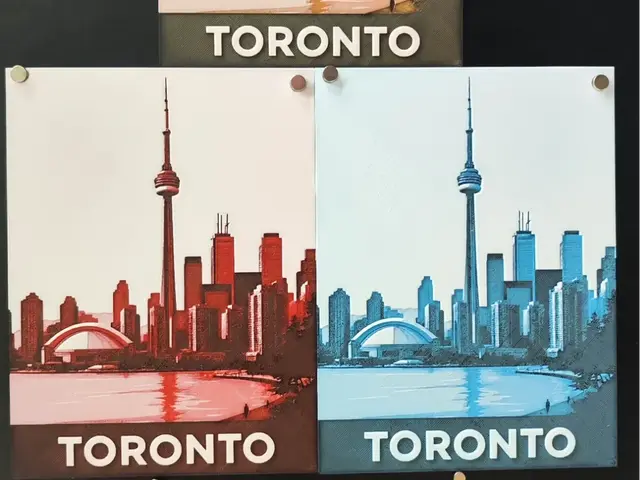
If you want a grid of subjects that are safe to build a business on — landscapes, florals, night skies, and abstract work with no franchise attached — start here:
What Sells Well Long-Term vs. What's Just Trending?
Trend-driven subjects spike fast and fade faster; evergreen subjects sell at a steady clip for years. Whatever show or game is peaking right now will pull a crowd this month and be forgotten by the next fair. Pets, landscapes, and personalized pieces just keep selling. A healthy shop rides a couple of trends for the spike but stands on evergreens.
The trend trap is a timing problem. By the time you've dialed in a clean print of this season's hit, the season's over, the demand has moved on — and the subject was probably licensed anyway, so you were carrying legal risk for a short-lived bump. The math on evergreens is the opposite: a lower peak, but a far longer tail, and you amortize your setup work across years instead of weeks.
None of that makes trends worthless. A timely piece pulls new eyes to your booth, and some of those visitors stay for the evergreen work they didn't come in for. Use trends as the hook. Just don't build the foundation on them.
Where to Go From Here
Picking a subject that sells is half the job. Making it read on a crowded table is the other half — and the single biggest variable there is color. The Choosing Filament Colors for HueForge guide covers how to build a palette around a specific piece so your work reads from across the room, and The Hidden Cost of Filament breaks down what a print actually costs you — the number you need before you can price anything.
Display matters just as much at a booth as it does at home. A well-lit piece at eye level stops people in the aisle; the same piece flat on a table doesn't. Displaying & Photographing HueForge Prints covers the booth lighting, framing, and listing photos that make a filament painting sell itself, and How to Display 3D Printed Art at Home does the same for your own walls.
For the full business setup — registration, startup costs, and a first-90-days plan — see How to Start a 3D Printing Business. For where to actually sell — Etsy vs. craft fairs vs. local — and how to price, see How & Where to Sell 3D Prints.
When you're ready to find subjects worth printing, browse the full catalog or start with the animals roundup — just keep the rule in mind as you go: printable and sellable aren't always the same list.
Print the safe subjects, test them small, and scale what sells. That's the whole shop.